

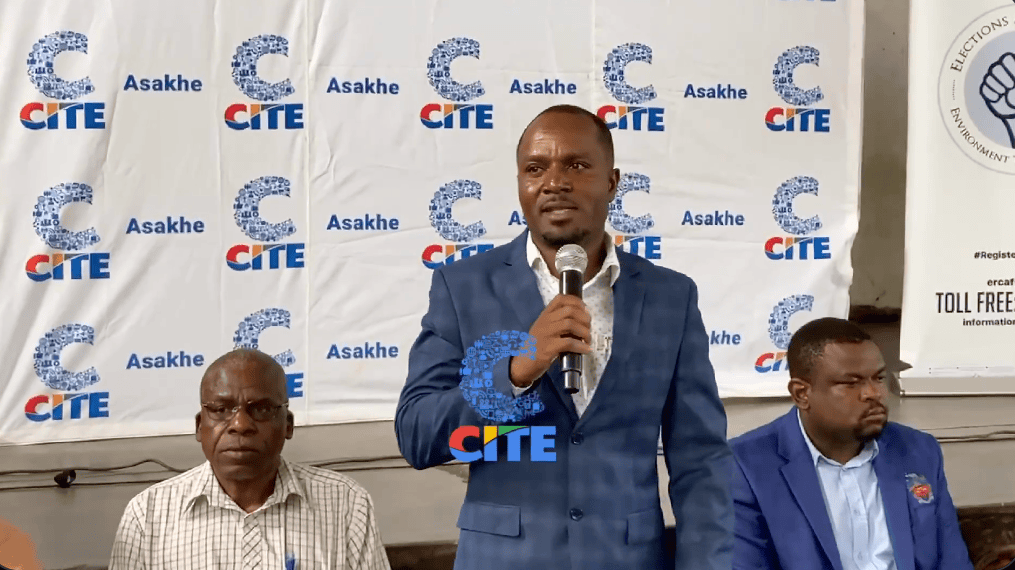
The Nkulumane parliamentary by-election has once again laid bare deep voter apathy in urban Zimbabwe, with official figures showing that only 22.7 percent of registered voters turned out to cast their ballots, despite heavy political mobilisation, alleged vote-buying and the deployment of significant campaign resources.
Out of a total voter population of 22 833 in Nkulumane, fewer than a quarter participated in the December 20, 2025 poll, reinforcing a long-standing pattern in which low turnout in by-elections has tended to favour the ruling Zanu PF, particularly in Bulawayo and across Matabeleland.
Zanu PF candidate Freedom Murechu won the seat with 3 416 votes, a decisive margin over a fragmented opposition field.
Independent candidate Rodney Donovan Jele came a distant second with 745 votes, followed by another independent contender, Esther Auxilia Zitha, widow of late Nkulumane MP Desire Moyo, who secured 325 votes.
On this topic
Citizens Coalition for Change (CCC)’s Mothusi “Madlela” Ndlovu garnered 320 votes, while independent candidate Fuzwayo Mbuso received 121.
ZAPU’s Vivian Viyo Siziba managed 110 votes, EFF Zimbabwe’s Alson Moyo 65, MDCT’s Ethel Sibanda 23 and Zimbabwe African National Congress (ZANC)’s Nompilo Malaba Ncube 18.
Election officials also recorded 36 rejected ballot papers, a figure that, while relatively small, added to concerns about voter education and electoral literacy in the constituency.
Despite Nkulumane considered as an opposition stronghold, the outcome reflects a broader national trend in which Zanu PF has consistently swept by-elections, benefiting from low participation and the concentration of state machinery on a single constituency at a time.
“Let’s analyse how Zanu PF has been doing in by-elections in cities. Let’s look at the huge winning margins,” said one political observer.
“For me it speaks to a dead or captured opposition. The opposition is at its weakest.”
Another analyst argued the ruling party’s dominance in by-elections is structural rather than purely popular.
“In a by-election, Zanu PF focuses state machinery on a particular constituency, making it difficult for the opposition to get anything. Zanu PF has largely won most by-elections across the country historically,” the analyst said in a social platform.
Iphithule Maphosa added that while victory margins may appear decisive, “the silence of the majority continues to raise questions about political legitimacy, citizen trust and the future of democratic participation in Zimbabwe’s urban centres.”
During voting day, Bulawayo Senator Kucaca Phulu of the CCC urged Nkulumane residents to exercise their democratic right, saying the presence of nine candidates offered voters genuine choice.
“This is democracy in action,” Phulu said, adding that anyone dissatisfied with the available options should consider standing as a candidate themselves rather than disengaging from the process.
However, turnout figures suggest that such appeals failed to resonate, particularly among younger voters.
At Mabhukudwana Primary School Polling Station A, presiding officer Taurai Gavi reported that out of a voting population of 685, only 114 people had voted by midday, 71 women and 43 men.
“Elderly voters are turning out more than young people,” Gavi noted, pointing to a persistent gap in youth participation and the need for intensified voter education to encourage young people to vote.
The by-election was also marked by allegations of vote-buying, which opposition candidates say further distorted an already uneven playing field.
ZAPU candidate, Vivian Siziba, expressed concern over the low turnout, arguing that what went wrong during the campaign period was “very bad” and centred on widespread vote-buying by the ruling party.
Siziba alleged Zanu PF distributed food hampers and drilled boreholes under the guise of service delivery, but only during election periods, targeting elderly and vulnerable residents.
“Such assistance should be consistent, not election-driven,” he said, urging voters to “take what is given but still do the right thing when voting.”
Independent candidate, Rodney Jele went further, filing a formal complaint with the Zimbabwe Electoral Commission (ZEC) alleging systematic vote-buying by Zanu PF operatives in Nkulumane.
In a letter dated December 20, 2025 and addressed to the Bulawayo Provincial Elections Officer, Jele accused ruling party activists of offering cash and food in exchange for votes.
“I note with concern that Zanu PF has people at 2272 Nkulumane, who are waylaying voters and demanding proof of having voted for Zanu PF in exchange for a packet of mealie-meal or USD10,” Jele wrote.
“This is clear vote-buying and is a breach of the Electoral Act (Cap) 2:13.”
Jele alleged similar practices were occurring near other polling stations, describing a mobile, transactional voting scheme that required voters to provide proof of their ballot choice, a serious violation of electoral laws if substantiated.
Opposition parties said the alleged use of both cash and staple commodities highlighted tactics designed to exploit immediate financial hardship and long-term economic vulnerability among voters.
Nevertheless, the opposition candidates had hoped that Nkulumane residents were capable of resisting inducements.
Jele added that his team had been surveying areas where houses were allegedly offered money and would submit further reports to ZEC.
Beyond malpractice claims, civil society voices warned that the most troubling feature of the by-election was not who won, but how few people voted.
“For meaningful democratic participation, there is absolutely nothing to celebrate about this result,” said Siphosami Malunga on X.
“This level of disengagement and apathy simply says no one really knows what the majority in Nkulumane want or are thinking politically. This should also worry ‘victorious’ Zanu PF.”
Political commentator, Calvin Majora echoed this concern, arguing that the opposition should be more alarmed than the ruling party.
“This is their stronghold,” Majora said on X. “The issue is whether they can convince their supporters to go to the polls, the same polls they allege won’t work. Soon they will need people to vote for them.”
The by-election also exposed gaps in voter education, with some prospective voters turned away for not being on the voters’ roll, going to polling stations with defaced identity documents, drivers licenses or expired passports.




Leave a Reply