

BY MOSES MUGUGUNYEKI
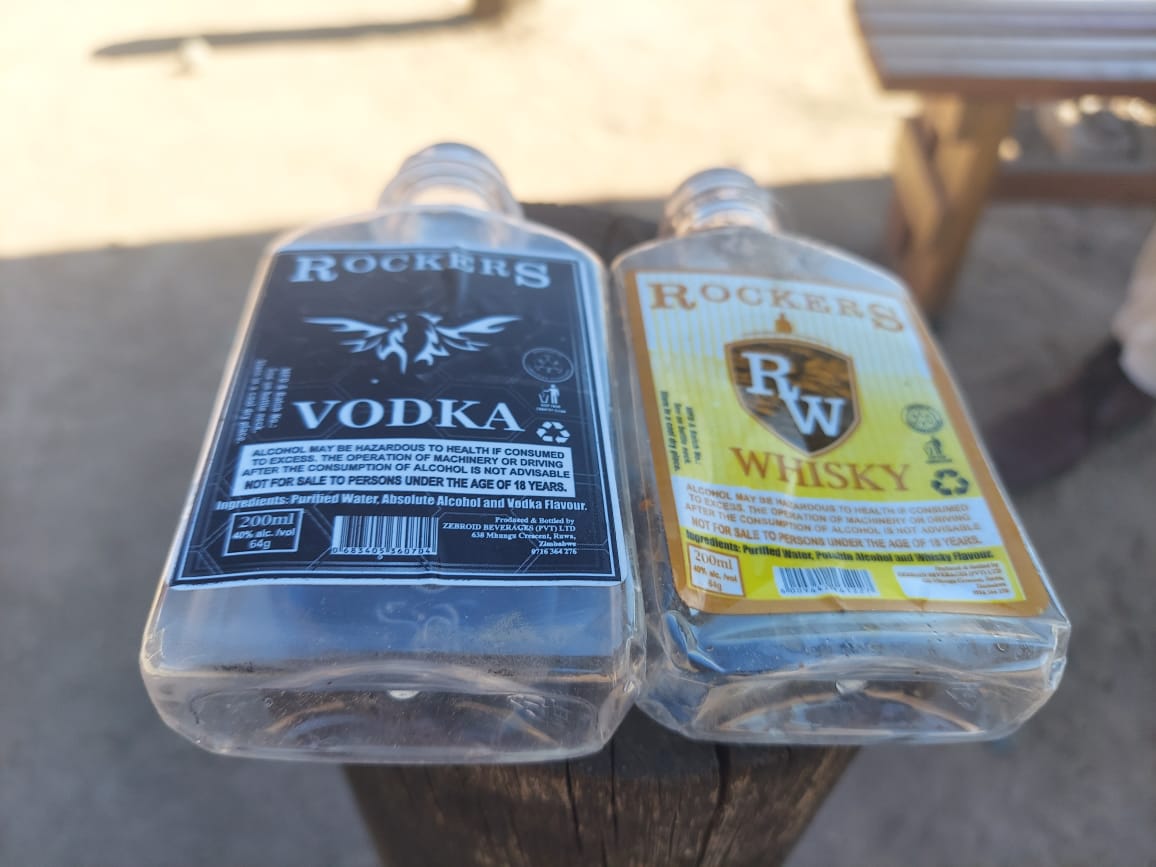
At Mbare’s Materereni Flats in Harare, Paradzai Chindoko, a middle-aged man, swayed unsteadily before collapsing onto the ground, his laughter echoing along the busy street. In his hand, he clutches a small plastic bottle of an illicit alcohol, bought for US$0,50.
For him, and many like him, this potent concoction offers a quick escape from poverty and hunger.
“I just needed something to make me forget my troubles,” Chindoko mutters, his speech slurred, as onlookers shake their heads.
On this topic
Traders and residents said the scene has become all too familiar. Almost every day, men, and increasingly young people, gather in the neighbourhood where the illicit brew is sold discreetly by vendors.
The business thrives as it is cheaper and more accessible than licensed beer.
“You can buy a bottle for half a dollar and it’s enough to knock someone out. It’s killing our people slowly,” said one vendor outside Materereni Flats.
As dusk settles, the man remains slumped by the wall, a living reminder of how the flourishing illicit alcohol trade is tearing through Zimbabwe, one bottle at a time.
Across town, in Highfield Tendai Mazwi sits outside his parents’ home and at 34, he looks much older than his age, his face marked by years of hard drinking.
Mazwi recalls the bitter sachets of alcohol he bought for as little as US$0,50 on street corners and bottle stores, the same drinks that nearly destroyed his health and his marriage.
“I thought I was just saving money,” he said softly. “But those bottles cost me everything, my job, my family, my dignity.”
Mazwi and Chindokoi’s stories capture the hidden price of Zimbabwe’s booming trade in illicit alcohol, a cocktail of financial losses for the state and legitimate brewers, windfall profits for backyard producers and underground retailers, as well as well as a rising toll on health and families.
The illicit brew market is no longer just a backyard hustle, it has mutated into a million-dollar shadow economy run by cartels, investigations carried by CITE have revealed.
The investigations established that behind the cheap plastic bottles of the illegal alcohol, popularly known as tumbwa or musombodhiya, flooding markets across the country, lurks a sophisticated criminal network that thrives on state capture and corruption.
Despite the government’s ban in June on unregulated alcohol under Statutory Instrument 62 of 2025, production and consumption of these toxic brews have escalated with impunity.
The statutory instrument outlines stringent measures aimed at cracking down on the illicit brew industry and sets heavy penalties on violators, including fines, imprisonment and the seizure of equipment used in brewing.
Soon after the gazetting of the statutory instrument, police destroyed 333,2kg of dagga, 293 dagga plants, 15,86g of crystal meth and 214 kg of unregistered medicines at Sally Mugabe Hospital while 14 140 litres of liquid medicines were destroyed in Chitungwiza.
On July 1, police also arrested seven directors of Samina Liquar Company for manufacturing and distributing illicit alcohol at their premises in Harare’s Arlington Industrial Area.
The directors, all foreign nationals, and their 25 employees were arrested and appeared in court before they were released on bail.
The company had been manufacturing and distributing four types of alcoholic labels, Jay-Dox Vodka, Happy Cheers Whisky Premium and Jay Dox Brandy since last year.
However, investigations carried by CITE revealed that despite the highly publicised burnings and arrests the illicit liquor industry persists, powered by poverty, weak enforcement, and high demand for cheap alternatives.
These drinks, often sold in repurposed whisky bottles or counterfeit branded packaging are found everywhere, from high-density suburbs in Harare to rural shopping centres in Gokwe, Bikita, Shurugwi and Zaka, investigations revealed.
“We just heard that these whiskies should not be displayed on the shelves, but we are still selling them through the back door,” said a bar lady at an establishment at Nyika growth point in Bikita.
“My boss brings the ‘whiskies’ from Masvingo and they are selling like hot cakes compared to other alcohol.”
CITE also established that several liquor outlets at Nyika growth point and Jerera growth point in Masvingo as well as several other rural shopping centres across the country were selling the illicit liquor discreetly.
In urban areas, the “whiskies” are sold inconspicuously by vendors, tuckshops and beer outlets.
“This is sold by most vendors at Zengeza 2,” said Killian*, who was holding
Brands like Black Panther, Locardia, Hudson, 8PM Whisky and Vox, which have become household names in ghettos and rural shopping centres.
Sold cheaply, the “whiskies” are preferred by unemployed youths and cash-strapped rural people.
CITE also established that illicit alcohol distillers, many disguised as “small entrepreneurs,” operate under the protection of politicians and rogue elements in law enforcement.
Two years ago, former Zanu PF candidate Robert Nyemudzo was jailed an effective 18 months by a Chipinge magistrate for brewing illicit beer at his homestead at Checheche growth point.
He was facing charges of contravening the Harmful Liquids Act and was convicted after the State found incriminating evidence against him.
According to the courts, Nyemudzo used fake names of recognised brands to push sales to unsuspecting consumers.
He was diluting ethanol blend with water and police confiscated 20, 360x200mls bottles of illicit beer and 2, 380x200mls empty plastic bottles as well as 6×20 litre buckets of ethanol blend.
Surprisingly, Nyemudzo was acquitted of the charge a few months later by the High Court in Mutare.
His conviction lifted the lid on what sources said was an “intolerable alliance” between him and a senior Zanu PF official in the province.
Nyemudzo, who had been suspended from Zanu PF following his arrest in 2023, had his suspension lifted early last year.
CITE established that despite the arrest Nyemudzo had been brewing “whiskey” called Super Champ at his homestead.
“There are some ‘whiskies’ being sold at the growth point and are said to be manufactured by Nyemudzo,” said a Zanu PF politician in Chipinge.
“It’s true, the ‘whiskies’ are distributed across Chipinge.”
Nyemudzo could not be reached for comment.
However, speaking at a Zanu PF youth league inter-district meeting in Hwange in September, Youth minister Tino Machakaire conceded that some senior Zanu PF officials were involved in drug and substance business.
“It is now high time that we call a spade a spade. Drugs are killing us and drugs are killing our nation,” he said
Machakaire urged law enforcement authorities to arrest the “untouchable” culprits.
He said drug and substance abuse was destroying lives and communities, stressing that it was time to deal with the problem openly.
In the wake of the booming illicit liquor business, legitimate brewers are feeling the squeeze too.
In June Delta Corporation, the country’s dominant beverage producer admitted that its beer volumes were under pressure, partly because consumers were switching to cheaper illicit options.
“These rogue brews are, not just fueling a health crisis, but an attack on trusted brands and fair business,” said Delta Corporation’s general manager for corporate affairs Patricia Murambinda.
She said fake alcohol sold without regulation, lab testing, or proper packaging has been steadily undermining consumer confidence and destabilising the market.
“We need tighter laws, more frequent raids, and serious consequences for offenders,” Murambinda said.
“Faster trademark registration and better resourcing of enforcement agencies are also critical in this fight.”
Though precise figures are closely guarded, industry insiders estimate that informal brews may account for up to a quarter of alcohol consumption in some provinces.
“It’s hard to compete when someone sells a bottle for half your production cost,” said a manager at a licenced liquor distributor, on conditions of anonymity.
“We pay tax, duties, wages and electricity. They pay nothing — and they take our customers.”
CITE investigations also revealed that the illicit brew business was not just a public health issue, it is a massive economic drain.
Zimbabwe’s treasury loses millions in potential excise duty, VAT and corporate tax as unregistered producers sidestep regulation.
“Many small retailers, vendors and shebeen operators are creaming profits because they don’t pay taxes,” said an economist.
“With minimal capital outlay, some buy 20-litre drums of ethanol and mix it with water for as little as US$30, decanting into bottles that bring back more than double in sales.
“For these operators, the maths is simple: demand is high, supply is cheap, and the risk of raids is low.
“Police occasionally confiscate stock or make arrests, but networks quickly reorganise.”
Behind the profit margins lies a darker ledger. Hospitals across the country report rising cases of alcohol poisoning linked to cheap spirits.
Doctors warn of long-term liver and kidney damage from prolonged use of unregulated drinks.
“Unregulated drinks containing high levels of alcohol can cause significant kidney damage by increasing the risk of chronic kidney disease, causing high blood pressure and leading to dehydration,” said medical doctor, Johannes Marisa.
“Excessive alcohol consumption stresses the kidneys’ ability to filter waste and can lead to acute kidney injuries.”
However, for a myriad of families, the costs are not just medical.
“Many alcoholics spend scarce household income on tumbwa instead of food, driving deeper poverty.
“Domestic violence and neglect often follow,” said Takemore Mazuruse, a development practitioner.
In Chitungwiza, 28-year-old Memory Shumba* recounts how her partner’s drinking almost killed their relationship.
“He would drink those little bottles every night, come home angry, sometimes violent,” she said.
“When he collapsed one day, I thought he was gone. Rehabilitation saved him, but the scars remain.”
Rehabilitation is expensive, private centres charge hundreds of dollars per month, while public facilities are overstretched.
Alcoholics Anonymous Zimbabwe, still active in major towns, provides support groups, but volunteers said relapse was common given the easy availability of illicit booze.
Experts warned that Zimbabwe was fighting the wrong battle by focusing on illicit brews while ignoring the wider alcohol industry.
Southern African Alcohol Policy Alliance director Wongai Nyahuye said: “The alcohol industry has normalised the abnormal using its huge capital to shape culture and sport. Tumbwa exists because we have failed to deal with the bigger illicit alcohol problem.”
Nyahuye cited World Health Organisation data showing that alcohol contributes to three million deaths annually, yet policies in Zimbabwe remain weak and fragmented.
Drug policy expert Wilson Box said while government efforts to curb the sale of illicit brews were commendable, the ban alone would not solve the country’s deepening drug crisis.
“We need to look at our policies and see how best we can approach drug use as a public health issue, not just a criminal matter,” Box said.
“It’s important to curtail those who are supplying and peddling drugs, but we must also take off our suits, go on the ground, and see what really needs to be done.
“The government must find ways to occupy the youths meaningfully and activate the seven pillars of the National Drug and Substance Abuse Framework if we are to make real progress.”
The Zimbabwe Republic Police (ZRP) said it was intensifying its “war on drugs” through a multi-pronged strategy that includes supply reduction efforts, arrests and public awareness campaigns.
Police national spokesperson Commissioner Paul Nyathi said the law enforcement agency’s operations have seen the arrest of a myriad of drug peddlers and those involved in illicit substances.
“Our strategy has yielded substantial results with our operations conducted nationwide,” he said.
“Between September and October, we arrested 138 drug and substance users and peddlers. Among the arrested, 108 are youths aged 35 years and below.”
Nyathi said the arrest of high-profile people like Robert Mugabe Jnr in October goes to show the resolve of the government to fight the drug and substance scourge.
“We are fully aware of various allegations that they are sacred cows. The police are not sparing anyone,” he said.
“We have even taken action against musicians who have been fingered in drug and substance abuse. What we want is information.
“People should not be intimidated. We are making drugs harder to obtain and more expensive to purchase, directly impacting the viability of these illegal operations.”
The son of former president Robert Mugabe was arrested on October 1 in central Harare after police officers observed him driving against oncoming traffic.
Prosecutors said when the officers stopped the 33-year-old silver Honda Fit and conducted a search, they discovered two sachets of cannabis weighing two grams.
The drug had a street value of US$30 and was found inside a sling bag he was carrying. Police officers are said to have discovered a packet of rizzler papers and a small grinder.
Harare magistrate Lisa Mutendereki ordered Mugabe Jnr to pay a US$300 fine or serve four months in prison.
Last year President Emmerson Mnangagwa launched the Zimbabwe Multi-Sectoral Drug and Substance Abuse Plan (2024–2030), promising rehabilitation centres and inter-ministerial coordination.
However, analysts warned that without tackling the political protection rackets, the plan risks becoming another paper policy.
*Names changed to protect identity
Support CITE’s fearless, independent journalism. Your donation helps us amplify community voices, fight misinformation, and hold power to account. Help keep the truth alive. Donate today



Leave a Reply