

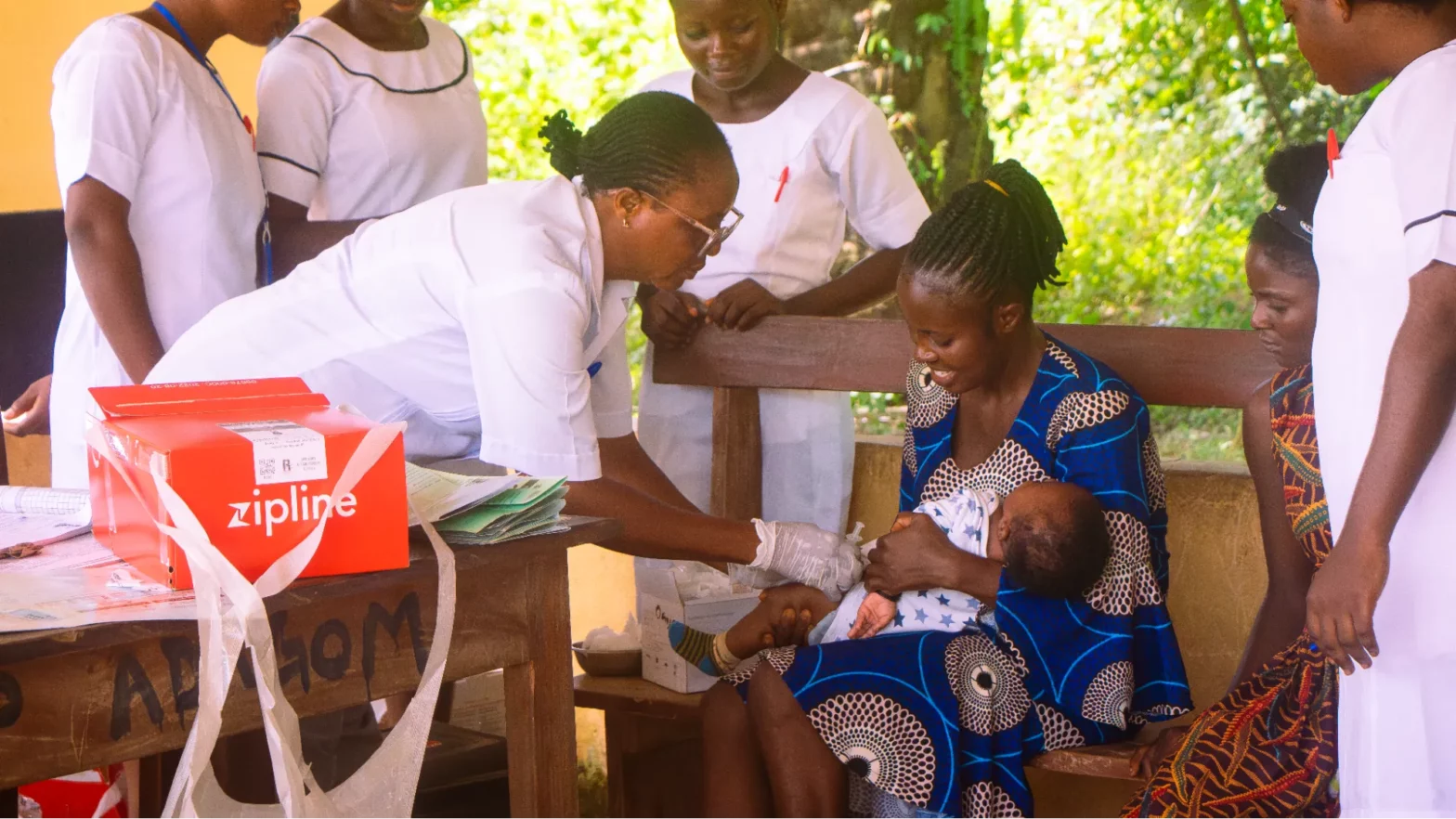
The United States has announced an expansion of its partnership with Zipline, a drone logistics company delivering blood and medical supplies to remote communities across Africa.
The development was outlined during a US State Department Africa Regional Media Hub briefing on Wednesday, where officials highlighted the initiative’s potential to strengthen health systems and create jobs across the continent.
Under the project, the US has committed up to $150 million to support the distribution of blood, vaccines, and essential medicines to 15 000 health facilities in Côte d’Ivoire, Ghana, Kenya, Nigeria and Rwanda.
Officials estimate the programme will reach 130 million people, marking one of the largest drone-enabled public health distribution efforts in the world.
On this topic
Senior Bureau Official for the State Department’s Bureau of Global Health Security and Diplomacy, Jeff Graham, said the collaboration is a key component of Washington’s new America First Global Health Strategy, launched in September.
The strategy seeks to improve the impact of US global health investments, reduce waste, and shift partner countries toward greater self-reliance.
“As part of that health strategy, we need to be able to deliver life-saving medical products to people in need across Africa, especially in hard-to-reach areas,” Graham said.
“That’s why we’re working with Zipline, an American company, using their American-made robotics and drone tech to deliver these life-saving products at greater speeds and greater efficiency.”
Graham stressed that the initiative also advances US economic and diplomatic interests.
“We’ll create manufacturing jobs in the United States and local jobs on the ground. These countries will become more responsible for maintaining and investing in their own country-led health systems. This is all about helping countries get ready to do most of this work on their own.”
Zipline Africa CEO, Caitlin Burton, noted that maternal deaths have fallen by more than half at Zipline-serviced facilities in Rwanda.
The drones, which operate 24/7 in all weather, have also reduced missed treatment opportunities for severe malaria and helped lower zero-dose vaccine prevalence.
“At full scale, the award will expand coverage, create about a thousand jobs, and drive an estimated $1 billion in annual economic growth in our partner countries. With improved logistics, innovative medicines and skilled health workers, Africa can imagine ending HIV transmission, ending maternal mortality, ending severe malnutrition,” Burton said.





Leave a Reply