


Zimbabwe’s government ministries continue transacting outside the official Public Finance Management System (PFMS), committing to contracts far beyond approved budgets and operating under weak monitoring systems.
This has allowed Zimbabwe’s expenditure to spiral out of control, resulting in a massive accumulation of unpaid bills.
The misalignment between budget allocations and actual cash releases has left the State owing ZIG45.6 billion (US$1.7 billion) to pensioners, service providers, schools, health programmes and contractors.
The arrears are crippling small businesses and destabilising essential social services, prompting the government to table a five-year Expenditure Arrears Clearance Strategy (2026–2030) aimed at liquidating the debt and preventing further fiscal slippage.
On this topic
The strategy, presented in Parliament by Finance Minister Professor Mthuli Ncube on November 27, 2025, outlines a phased, five-year plan to address a crisis born of weak fiscal controls and “over-contracting.”
At the end of 2024, the government owed US$1.69 billion, with 98 percent denominated in US dollars.
A significant portion of the arrears is owed to critical social and employee welfare programmes, including:US$98 million to the Basic Education Assistance Module (BEAM)US$77.05 million in Results-Based Financing claims for health services US$69.58 million to the Pension FundUS$23.48 million to the National Social Security Authority (NSSA)US$28.50 million for Medical Aid (PSMAS)US$0.39 million to the Government Employee Mutual Savings FundUS$50 million to the Zimbabwe School Examinations Council (ZIMSEC).
The strategy bluntly diagnoses the causes of this accumulation, stating “expenditure arrears arise when the Government fails to meet its payment obligations for wages and salaries, recurrent goods and services, capital goods and services, transfers and subsidies, within the timeframes contractually or legally required.”
The strategy identifies the root causes as ministries transacting outside the official public finance management system, weak monitoring, “over contracting, where Ministries, Departments, and Agencies (MDAs) are committing above the budgeted resources,” and a “misalignment of budget and cash releases.”
“The accumulation of expenditure arrears to the providers of goods and services has emerged as a Public Financial Management (PFM) risk for the fiscus,” the strategy states.
“This challenge undermines effective budget implementation and fiscal discipline, a problem faced by many governments globally.”
To clear the debt, the government proposes a reverse auction mechanism. Verified arrears will be converted into five-year, non-tradable government securities, with creditors bidding to sell their debt back to the state at a discount.
Those willing to accept the largest cuts will be paid first, while creditors not participating or whose offers are rejected will be repaid at maturity.
The plan also considers debt-for-asset swaps with entities like pension funds.
The strategy prioritises social obligations.
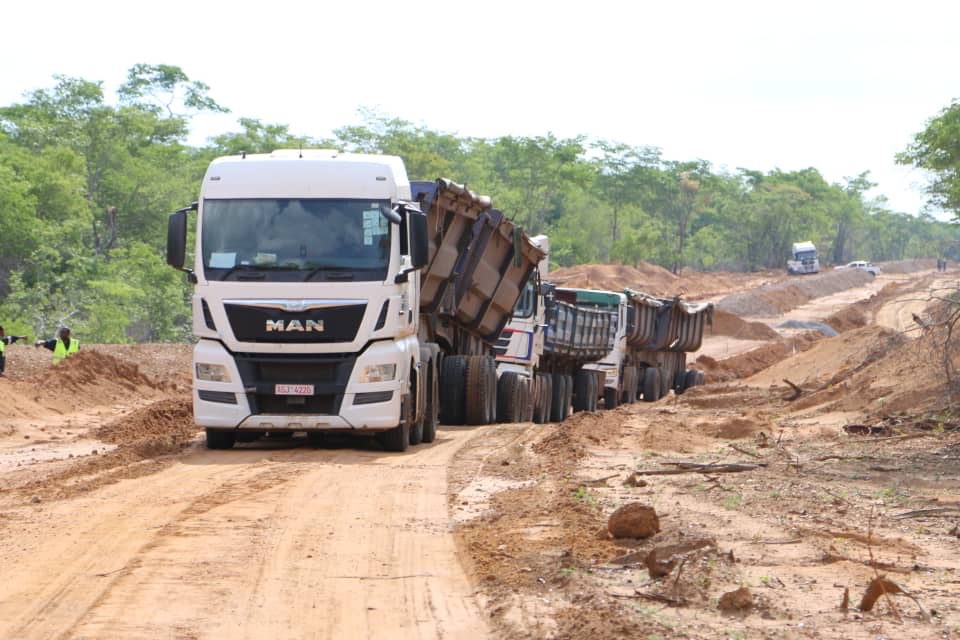
Category 1, totalling US$305 million, covers pensions, health insurance and support for students and war veterans. Category 2 – US$58.84 million covers utilities and ZIMSEC, while Category 3 – US$1.32 billion, comprising capital projects for dams, roads and agricultural inputs, will be addressed last due to its limited short-term social impact.
The government has pledged to prevent new arrears by mandating PFMS use, requiring Treasury approval for contracts over US$2 million, and aligning budget releases with cash availability.
“Government is committed to clearing the stock of expenditure arrears and strengthening PFM to prevent their further accumulation,” the strategy asserts.
However, the plan’s success depends on fragile fiscal improvements over the next five years and the willingness of creditors, from pensioners to small contractors, to accept discounted payments for debts long overdue.
Former Education Minister, Senator David Coltart, also the mayor of Bulawayo, said he was profoundly shocked by some revelations in the budget, particularly relating to the education sector.
“I note that some US$98 million allocated to BEAM and a further US$50 million to ZIMSEC has not been paid,” Coltart said on his X account.
He explained that BEAM funds enable children from poor families and orphans to attend school.
“When the government fails to pay BEAM, either children are refused access to school or schools must cut back dramatically on materials such as books, severely disrupting learning. Once children miss out on foundational education, it is almost impossible to recover.”
Coltart also warned that non-payment to ZIMSEC could lower examination standards, prejudicing students writing public exams.
He described the arrears as “gross dereliction of duty by the current government,” warning that the cost would be felt in reduced literacy rates and a generation of young adults who are less employable and productive.
“Government needs to give an unequivocal undertaking that this policy will end immediately so that children are not so badly prejudiced going forward. The future of Zimbabwe depends on it,” he said.



Leave a Reply