
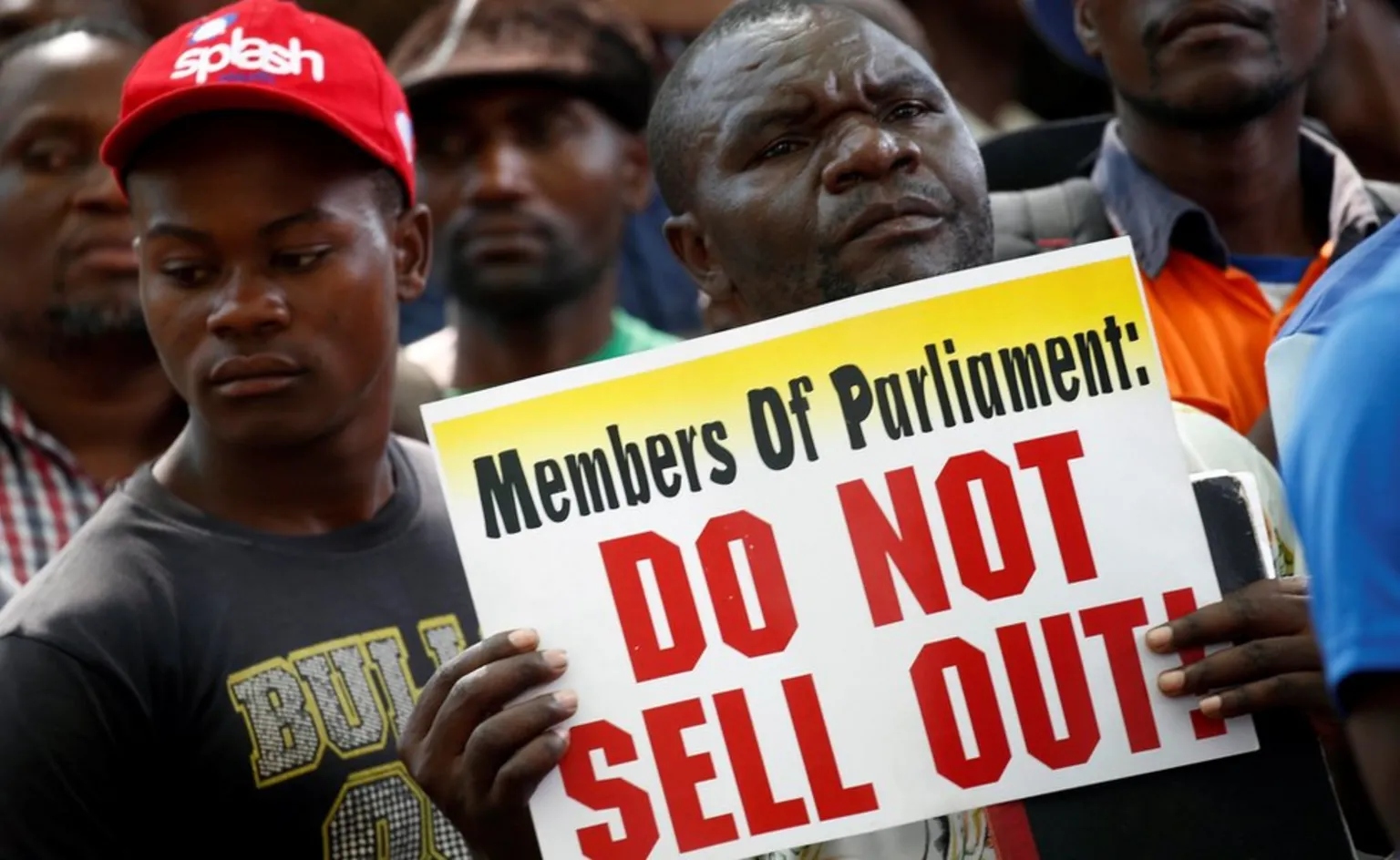
Journalist and media expert Rashweat Mukundu has warned that the term “sellout” has become a powerful and destructive political weapon in the country, used to stigmatise opponents, deepen national divisions and silence dissent.
Speaking on This Morning on Asakhe, Mukundu said the label is rooted in identity politics shaped by the ruling establishment, which defines narrow national values and portrays anyone who holds different views as a traitor.
“The dominant political party, particularly ZANU-PF, views anyone outside their framework as sellouts,” he said.
“If you disagree, you are labelled a sellout, someone who is out of the national system and not complying with national interests.”
On this topic
Mukundu said the practice has long-standing origins tracing back to the early post-independence years. Efforts in the early 1980s to create a monolithic political system, he said, clashed with deeply fractured identities shaped by tribe, ideology and competing visions of how the new Zimbabwe should be governed.
“These initial divisions, inherited from the 1980s, persist today,” he said.
He added that the label has historically been used to justify violence, noting that some communities were branded as sellouts during periods of political conflict and repression.
“We have thousands and thousands of people who died simply for being labelled sellouts, and hundreds of others who had to leave the country,” he said.
Mukundu said even senior liberation figures, including the late former president Robert Mugabe, had at times been portrayed as sellouts within the ruling party.
He argued that the lack of a shared national value system has allowed the term to be misused for political gain, fuelling polarization and undermining democratic processes. The label, he said, influences how political opponents are treated in state institutions, including Parliament and the electoral system.
“If you are labelled a sellout, you must be attacked, you must be arrested, you must be denied your basic rights, you must be denied the protection of the state,” he said.
Mukundu warned that the continued weaponisation of the term poses a serious threat to political stability, especially when used alongside coercive measures such as the military to target opponents.
“This is a very dangerous concept in its worst definition,” he said. “It has hindered Zimbabwe’s ability to unite and to hold meaningful dialogue on critical national issues.”
Support CITE’s fearless, independent journalism. Your donation helps us amplify community voices, fight misinformation, and hold power to account. Help keep the truth alive. Donate today





Leave a Reply