
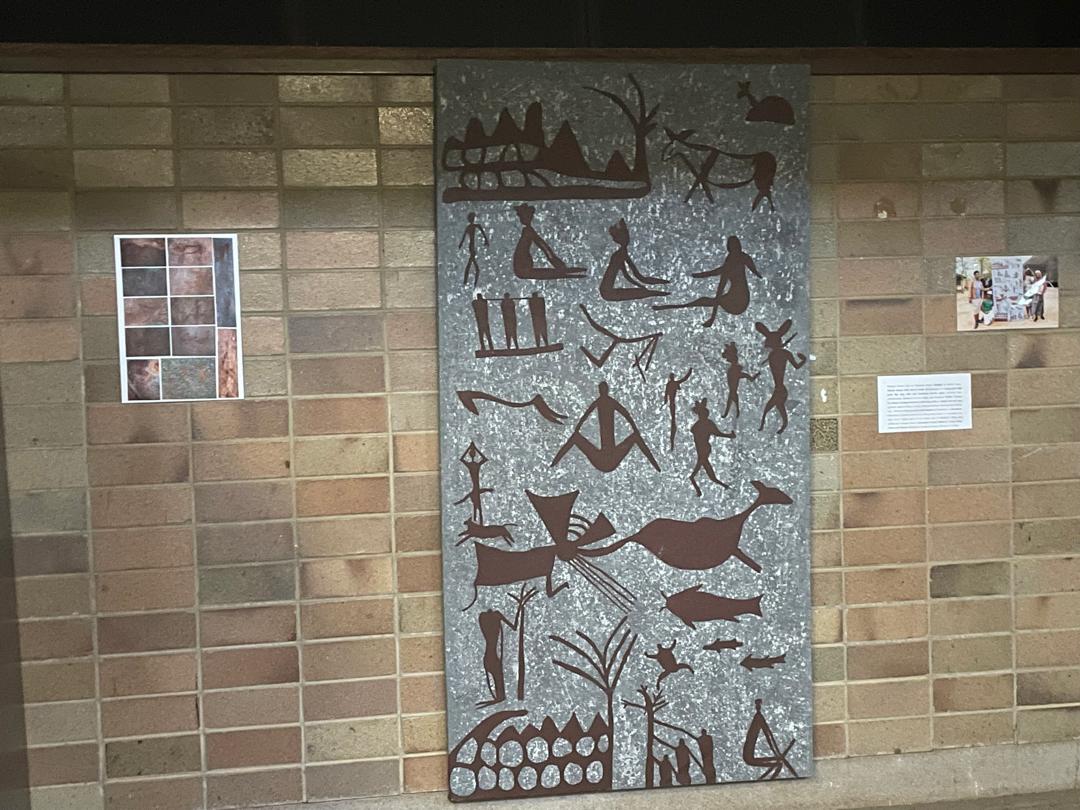
A United States-funded cultural preservation project aimed at rehabilitating and safeguarding endangered San rock art in the Matobo Hills, spearheaded by Amagugu Cultural Heritage Centre, reached a major milestone on Friday with the screening of a documentary titled “Kuyini Lokhu? What is This?”
Beyond its preservation goals, the initiative also honours part of the late cultural historian and author Phathisa Nyathi’s vision of protecting and promoting Zimbabwe’s cultural heritage through art and education.
Launched in 2024 by United States Ambassador to Zimbabwe, Pamela Tremont, under the Ambassador’s Fund for Cultural Preservation, the US$125,000 project focuses on restoring rock art at Pomongwe Cave, part of the Matobo Hills UNESCO World Heritage Site. It also aims to deepen community appreciation for cultural heritage protection.
The initiative brings together a network of local and international institutions, including Friends of the Zimbabwe Museum of Human Sciences, the University of Zimbabwe’s Department of History, Heritage and Knowledge Systems, and the TRACES Laboratory at the University of Toulouse in France. It is supported by the National Museums and Monuments of Zimbabwe and UNESCO.
On this topic
The project is one of the final undertakings associated with the late Phathisa Nyathi, the founding director of Amagugu, whose lifelong mission was to preserve and celebrate Zimbabwean culture.
Speaking to CITE during the documentary launch, Bulawayo-based mural artist and project team leader, Leeroy Brittany, said he was proud of the team’s achievement, describing the experience as both challenging and enlightening.
“I’m happy that we managed to complete this stage of the project. It’s one of the most complex yet exciting projects I’ve worked on. It gave me a chance to dig deeper into our history. I learned a lot about the mysteries and myths that surround our culture,” he said.
Brittany explained that the team experimented with natural materials such as roots, bark, soil, coal, and stones to recreate the ancient paints used by San artists, an approach they hope to explore further with scientists in future phases.
“We still don’t know exactly how the original pigments were made. On our next project, we aim to work with chemists and scientists to understand the components of those paints,” he added.
Amagugu Director Allington Ndlovu said the project was conceived as an urgent intervention to protect rock art endangered by both natural erosion and human activity.
“This art is an integral part of our history and culture, yet it’s slowly disappearing. We involved the Matobo community, who were already active in art projects like My Beautiful Home, to reproduce this ancient art on canvases, rock slates, and duplex paper for exhibitions. The goal is to raise awareness among artists, educators, and policymakers about the importance of heritage preservation,” he said.
Ndlovu added that the project also stands as a tribute to the late Nyathi, whose vision and mentorship were instrumental in shaping its direction.
“This was part of Bab’uNyathi’s dream, to preserve our culture and heritage through art. He envisioned catalogues, exhibitions, and educational materials that would tell the story of San rock paintings to the world,” Ndlovu said.
Documentary producer Priscilla Sithole-Ncube said the film took about six months to produce and involved visits to more than 40 caves across Matobo.
“We discovered so much information we didn’t know before. This project taught us the importance of documenting history and respecting the spirituality of these sacred sites. We hope the documentary will one day be used in schools to teach learners about our history and culture,” she said.
Support CITE’s fearless, independent journalism. Your donation helps us amplify community voices, fight misinformation, and hold power to account. Help keep the truth alive. Donate today






Leave a Reply