

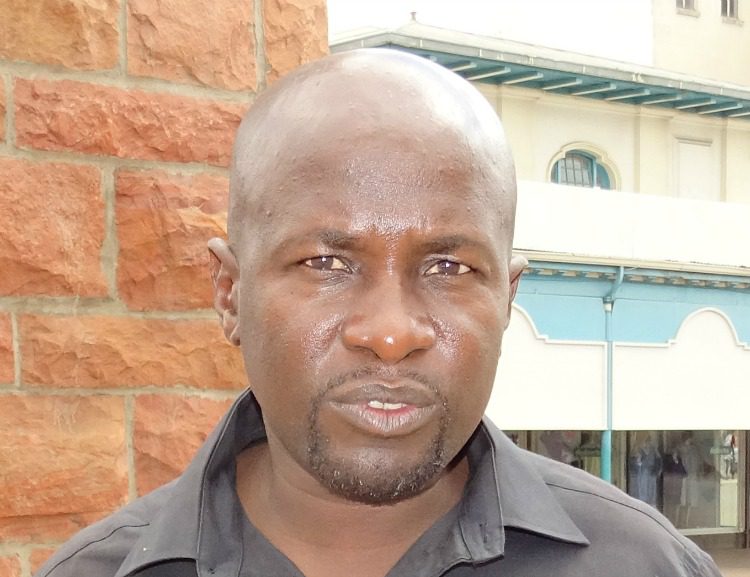
Bulawayo resident, Mbuso Fuzwayo, also secretary of pressure group Ibhetshu Likazulu, has filed an application with the Constitutional Court seeking to block the ruling Zanu PF party’s plan to extend President Emmerson Mnangagwa’s term beyond 2028.
The application, names Zanu PF as the first respondent, alongside the Minister of Justice, Legal and Parliamentary Affairs – Ziyambi Ziyambi, the Speaker of Parliament – Jacob Mudenda, the Attorney General – Virginia Mabiza and President Emmerson Mnangagwa himself, all cited in their official capacities.
The legal challenge centres on Zanu PF’s Resolution Number 1 of 2024, adopted at its National People’s Conference in Bulawayo in October 2024, which explicitly calls for the president’s term to be “extended beyond 2028 to 2030.”
The Zanu PF resolution directs both the party and the “Government” to “set in motion the necessary amendments to the National Constitution so as to give effect to this resolution.”
On this topic
This directive was reaffirmed with greater urgency at the party’s 2025 conference in Mutare, which, noting that “no notable steps have been taken,” directed the Secretary of Legal Affairs and the Minister of Justice to make sure the resolution is “fully implemented” before the 2026 conference.
In his founding affidavit, Fuzwayo, argues that this resolution creates a “real and imminent threat of unconstitutional action” that directly infringes upon his fundamental rights.
He is seeking direct access to the Constitutional Court to challenge it.
The founding affidavit is available here: https://cite.org.zw/constitutional-court-application-filed-to-stop-zanu-pfs-term-extension-for-president-mnangagwa/
Fuzwayo’s application lays out a clear set of demands from the court. He states that if granted leave for direct access, he will seek the following relief, quoted directly from the draft order:
“Interdicting the Respondents from taking any steps to implement Zanu PF’s Resolution Number 1 pending the determination of this matter.”
“Declaration that sections 95(2)(b) and 143(1) constitute term-limit provisions under section 328(1) and 328(7) of the Constitution.”
“Declaration that the implementation of Zanu PF’s Resolution Number 1 infringes my rights under sections 3, 56, and 67 of the Constitution.”
Fuzwayo said he is not seeking “any order of costs as against any Respondents as this is a matter of public and national importance.”
Fuzwayo’s application hinges on a critical interpretation of Section 328 of the Constitution, which deals with amendments.
Acting on legal advice, Fuzwayo, contends that provisions establishing the presidential term of office (Section 95) and the lifespan of parliament (Section 143) are “term-limit provisions.”
He cites the landmark case of Marx Mupungu versus Minister of Justice, Legal and Parliamentary Affairs and Ors CCZ7/21, where the court defined a term-limit provision as “a myriad of provisions that unquestionably constitute specific term limit provisions within the parameters of Section 328. First and foremost, there is s 95(2) which expressly stipulates that the term of office of the President is 5 years and coterminous with the life of Parliament.”
This is crucial because Section 328(7) of the Constitution states that any amendment to a term-limit provision that extends the term of an incumbent must be subjected to a national referendum.
Fuzwayo argues that Zanu PF’s resolution, by seeking to extend President Mnangagwa’s term without such a referendum, is fundamentally unconstitutional.
In his affidavit, Fuzwayo details how the resolution threatens his rights as a citizen.
It “threatens the rule of law principle by bypassing potential referendum safeguards, eroding multiparty democracy.”
Furthermore, he states it “discriminates by extending benefits to the incumbent President, the 5th Respondent, violating equality before the law protected under section 56 of the Constitution.”
Perhaps most significantly, he contends it “risks infringing rights (enshrined in section 67 of the Constitution) to free, fair elections and participation, as the amendments being sought without referendums would skew democratic processes.”
Fuzwayo asserts his right to approach the court under Section 85(1) of the Constitution, which allows any person acting in their own interests to seek relief when a right is “likely to be infringed.”
The application argues that the matter is of profound public importance, warranting direct access to the highest court.
It cites the “national significance of clarifying section 328(1) amid succession debates” and the “risk of irreparable harm if amendments proceed without judicial guidance.”
Adding a stark, real-world dimension to the legal dispute, Fuzwayo’s affidavit includes as an exhibit pictures of the petrol bombing of the Southern Africa Political Economy Series (SAPES) trust premises.
The bombing occurred on October 28, 2025, ahead of a news conference by opposition politicians of the term extension resolution that was due to be hosted at SAPES.
He presents this as “alarming evidence” of the high stakes and volatile nature of the dispute.
The second applicant, Ibhetshu Likazulu, through its vice-chairperson Thamsanqa Ncube, associated itself with Fuzwayo’s affidavit, stating that one of its fundamental mandates is “to guard against the violation of the Constitution.”





Leave a Reply