

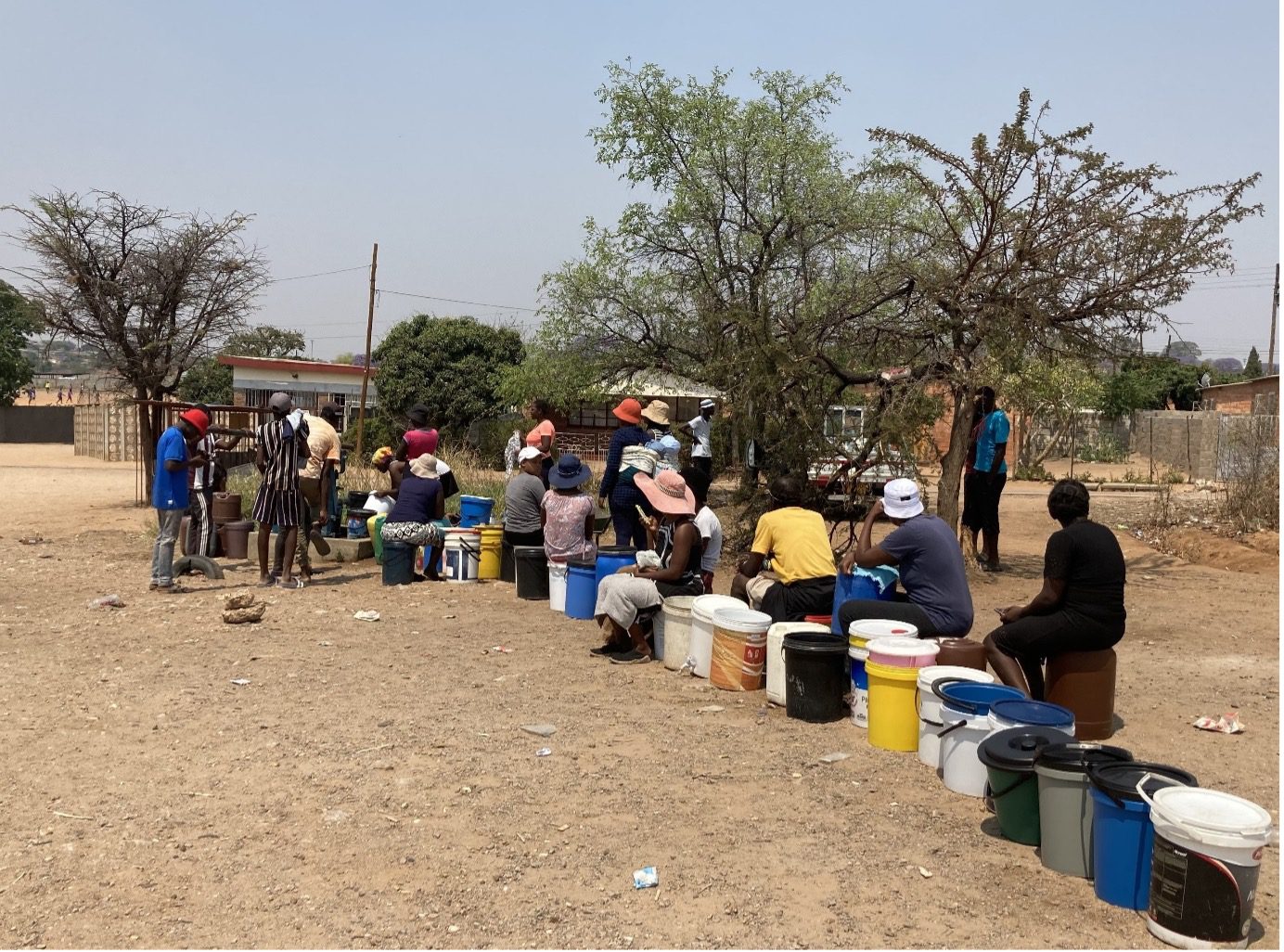
A worsening water crisis in Bulawayo is crippling businesses, disrupting livelihoods and forcing some residents to relocate in search of better living conditions, a situation civic leaders describe as both an economic and humanitarian emergency.
During a heated Bulawayo City Council meeting this week, councillors painted a dire picture of prolonged water cuts that have left some suburbs, such as Makokoba, without running water for up to five days or more.
They warned that the situation was no longer sustainable and urged the central government to step in with urgent funding and infrastructure support.
Ward 22 Councillor Mmeli Moyo said the crisis has reached a breaking point, with local businesses closing and residents abandoning the city due to worsening service delivery.
On this topic
“An amount of about US$900 000 was required to improve the water infrastructure system,” he said, adding that without this investment, the city’s economy would continue to shrink.
Moyo contrasted Bulawayo’s stagnation with the expansion of other urban centres such as Harare and called for a multi-stakeholder dialogue involving the government, the private sector and civic leaders to prioritise Bulawayo’s water crisis.
Ward 24 Councillor Aleck Ndlovu echoed his concerns, saying the city had normalised what should not be normal, residents enduring weeks without water.
“The City had normalised that abnormality that residents had to spend more than a week without water,” Ndlovu said.
He urged the government to fast-track completion of the Gwayi-Shangani Dam project, saying the delays were undermining investment prospects in the region.
Ward 9 Councillor Donaldson Mabuto called for the matter to be taken directly to the highest office in the land.
He appealed to the government “to approach the treasury to assist in water funding” and suggested that the Council “approach the Head of State directly to eradicate the crisis.”
Ward 18 Councillor Takunda Madzana also explained that part of the problem was not empty dams, but pumping challenges caused by erratic electricity supplies.
“Residents had spent up to four weeks without water recently,” Madzana said. “ZESA, the power utility, was a contributory factor to the City’s water crisis.”
He proposed that the government engage ZESA to ensure reliable electricity supply to water pumping stations, saying outages were worsening the shortages.
Mayor Senator David Coltart admitted that Bulawayo remains the only city in Zimbabwe facing inadequate raw water supplies, calling the crisis “priority number one” during the current budget consultations.
“Bulawayo stands as the only city in the entire country that faced the problem of inadequate raw water,” Coltart said.
The mayor outlined both short- and long-term plans to stabilise the city’s water system.
In the short term, the city intends to upgrade the Ncema Pump Station and rehabilitate pipelines connecting Ncema to Tuli, Insiza to Ncema, and Mtshabezi to Mzingwane.
Coltart also pointed out that an existing solar contract for the Mtshabezi pump, which could help solve the electricity shortages, “has never been implemented.”
In the medium term, he said, the Glassblock Dam construction remains key to improving Bulawayo’s water resilience, while the Gwayi-Shangani Dam project represents a long-term solution.
However, he noted that the 450km pipeline required to transport water from Gwayi-Shangani to Bulawayo remains the biggest challenge.
Ward 10 Councillor and Chairperson Khalazani Ndlovu closed the debate with an appeal for funds to repair leaking water pipes, saying the city was losing valuable water through outdated and broken infrastructure.
“Repairing leaking water pipes will help minimise the shortage of water in the city,” she said.




Leave a Reply