

By Nokuthaba Dlamini
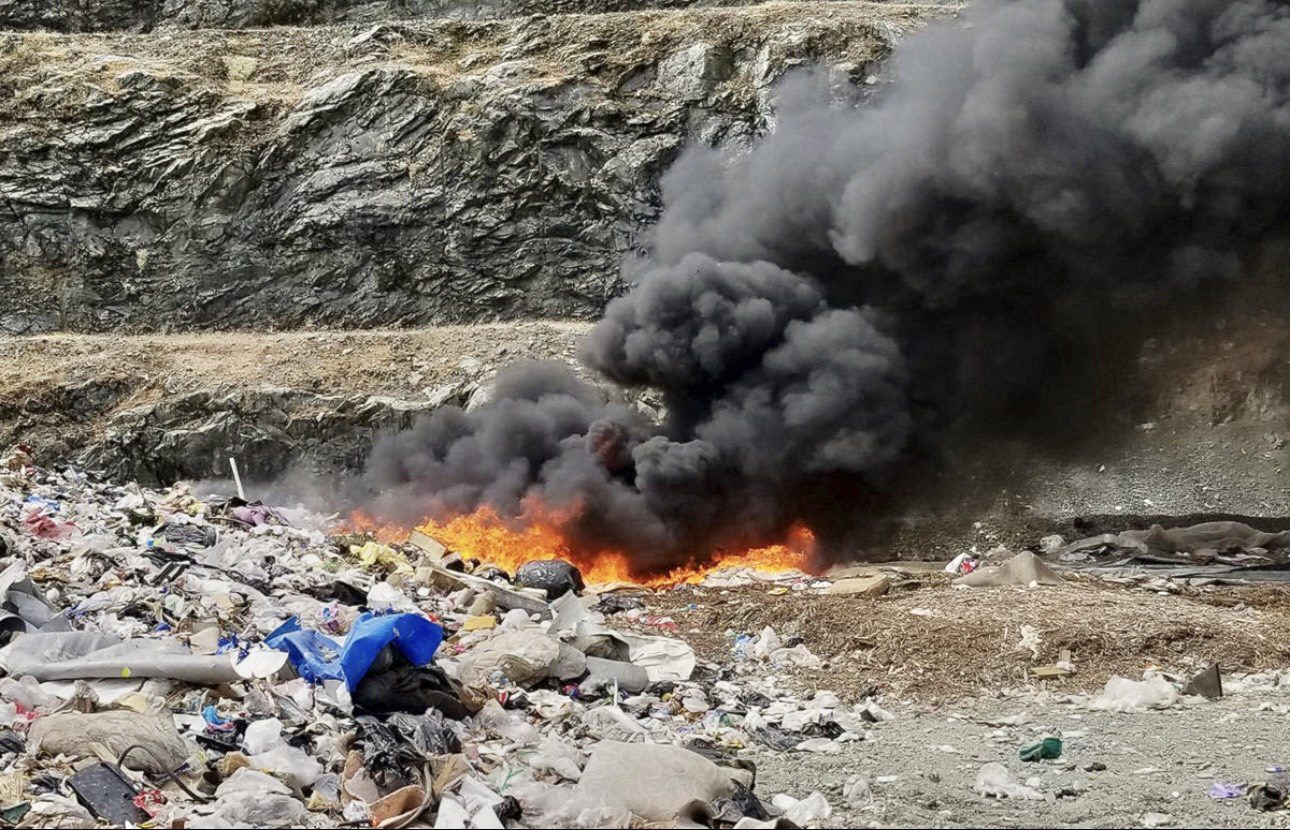
Thick, toxic smoke from the Masuwe dumpsite continues to engulf Victoria Falls, choking residents in Mkhosana and Chinotimba suburbs, and forcing some learners to suspend classes. The persistent fires at the city’s dumpsite have become a public health hazard, raising alarm among residents, teachers, and environmentalists.
The smoke, which drifts over the city especially in the early mornings and late afternoons, has left residents complaining of headaches, persistent coughing, and eye irritation.
During a recent stakeholder consultation meeting held at Chinotimba Clinic, the issue dominated discussions as residents and youth representatives voiced their frustrations to city officials.
On this topic
A student from Grace Mission School, who serves as deputy head girl, narrated how the smoke disrupted learning during the first week of August.
“The smoke affected both the primary and secondary school at Grace Mission,” she said. “It was on a Monday morning around 7am, and as we were on the inspection line, one of my prefects fainted. While we attended to her, two more students collapsed. One of our junior councillors, who is asthmatic, was struggling to breathe and had to cover her face with a hat.”
“The smoke was too much — we couldn’t conduct lessons that day. I personally had eyesight problems from the fumes. Our sports director tried to assist those who had fainted before their families picked them up. It’s hard to learn properly because of the smoke, especially now as we are writing our final exams as Form Fours.”
Residents in nearby suburbs say the situation has become unbearable.
Lydia Moyo, a Chinotimba resident who lives near the Truck Stop, said her family’s health is being affected.
“At night the smell is unbearable, plus the trucks’ dust has made it worse. My youngest child has developed a cough that just won’t go away. Even if we close all the windows, the smoke still gets in,” she said. “Sometimes we wake up to a thick haze in the yard, you can’t hang clothes or even cook outside. This can’t continue.”
Council admits lack of proper landfill system
Responding to the growing outcry, a female official from the Victoria Falls City Council engineering department explained during the budget consultative meeting at Chinotimba Clinic that the fires were caused by the city’s continued use of an open dumpsite instead of a proper sanitary landfill.
“The main reason why we are experiencing smoke from our dumpsite is the fact that we are not yet using a sanitary landfill,” she said. “What we are currently doing is dumping waste on our dumpsite. We collect it, dump it, and pile it up. Because we are piling up biodegradable materials like food waste from hotels and homes, plastics, and other decomposing matter, methane gas forms underground.”
She said this process leads to spontaneous fires.
“Every now and then, that methane gas triggers fires at the dumpsite,” she explained. “These fires occur naturally due to gas buildup, and that’s why you see smoke almost every other week.”
The official said the city has implemented a temporary measure to try and control the fires while working toward a long-term solution.
“We have tried a short-term measure called soil capping, where we cover the waste with soil to reduce fires,” she said. “However, that is not sustainable. The real solution is the sanitary landfill we have already started constructing. We’ve built one cell for it, but unfortunately, we currently don’t have the full equipment required to use that cell.”
“Right now, we’re still dumping waste because we cannot just stop collecting it. We’ve decided to use soil capping in the meantime to at least reduce the fires. Once we acquire the necessary machinery, we’ll be able to start operating the landfill fully. When that happens, we’ll be spreading waste properly, doing clay capping, and preventing methane buildup. That will stop these fires completely.”
She added that the city is in the process of procuring the needed machinery, expressing optimism that once funding is secured, the landfill will be fully operational.
“If we get the money, we’ll be able to stop the fires completely,” she said. “The long-term advantage is that we already have the landfill structure in place. What’s delaying us is just the equipment.”
City grapples with growing waste and shrinking disposal space
Victoria Falls City Council Public Health Officer Michael Ncube said the city is struggling to cope with increasing waste volumes and limited disposal space.
“One of our key functions is to manage waste within the city, but as Victoria Falls continues to grow, we are experiencing a significant increase in waste generation,” Ncube said recently on their Facebook page. “This calls for us to work closely with partners such as hotels, distillers, electronics recyclers, and other industries that produce large quantities of waste.”
He added that land for waste disposal is running out.
“The issue of land is now critical,” he said. “Where we currently dispose of waste, the land is diminishing. That means we have to think differently — we need to focus on waste reduction and recycling. Waste reduction cannot be done by the council alone; it requires partnerships with organizations that specialize in recycling.”
As a tourism hub, Victoria Falls produces large amounts of organic waste.
“Being a hospitality city, we produce a lot of food waste from hotels and lodges. On average, we generate over 80 tonnes of food waste every month,” Ncube said. “Food waste is one key area we are targeting for reduction through recycling and composting initiatives. We are already working with organizations that help process or reuse some of this waste, but we still have a long way to go.”
Wildlife and environment under threat
Environmentalists have warned that the dumpsite fires are also harming wildlife and surrounding ecosystems.
Tinashe Dube, a local conservationist, said the Masuwe dumpsite lies dangerously close to wildlife corridors linking to the Zambezi National Park.
“When the fires burn, smoke and toxic substances are carried into the park, affecting both grazing animals and scavengers,” Dube said. “Baboons, warthogs, and even elephants have been seen near the dumpsite, feeding on or sniffing through burnt waste. This poses serious risks to their health and can disrupt local ecosystems.”
Schools and residents bear the brunt
Teachers in schools closest to the dumpsite say learning has become almost impossible on days when smoke is thickest.
A teacher at a Lulu Academy, said the pollution is affecting both pupils and staff.
“Sometimes you walk into a classroom, and the air feels heavy,” she said. “Students start coughing during lessons,teachers are also struggling with constant headaches and eye irritation. It’s affecting education and our well-being.”
While council officials insist that the construction of the sanitary landfill marks progress, residents say the city must act faster.
Support CITE’s fearless, independent journalism. Your donation helps us amplify community voices, fight misinformation, and hold power to account. Help keep the truth alive. Donate today




Leave a Reply