
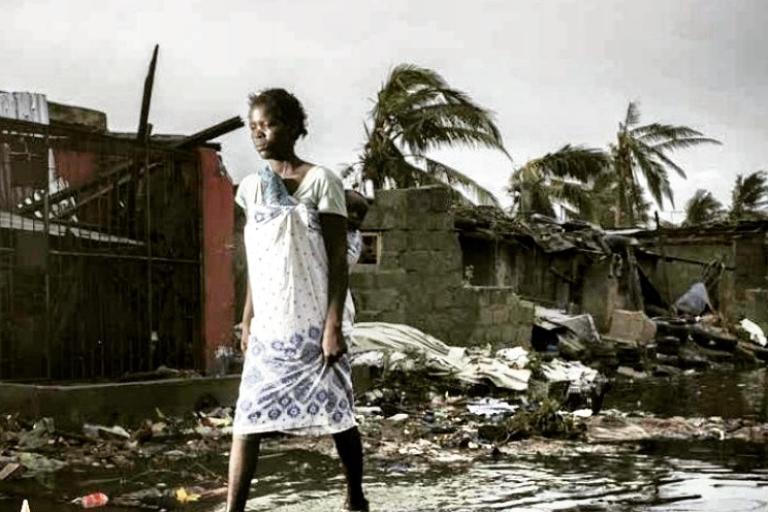
A new global report by the World Health Organisation (WHO) and the Lancet Countdown on Health and Climate Change has issued a dire warning that failure to act on climate change is a costly crisis as climate-related deaths and economic losses are on the rise.
The report, which was released on Wednesday, reveals that heat-related deaths have surged by nearly 23 percent since the 1990s, an indication of how global warming is directly threatening public health, with heat-related mortality now claiming an average of 546 000 lives annually.
WHO Assistant Director-General for Health Promotion and Disease Prevention and Care, Dr. Jeremy Farrar, said the worsening climate crisis is also a health emergency that demands urgent global attention.
“The climate crisis is a health crisis. Every fraction of a degree of warming costs lives and livelihoods,” he said.
On this topic
“This report, produced with WHO as a strategic partner, makes clear that climate inaction is killing people now in all countries. However, climate action is also the greatest health opportunity of our time. Cleaner air, healthier diets, and resilient health systems can save millions of lives now and protect current and future generations.”
The data paints a picture of a world under increasing duress as in 2024, the average person experienced 16 days of dangerous heat that would not have occurred without human-induced climate change.
Infants and older adults were even more vulnerable, enduring over 20 heatwave days each, a fourfold increase over the past two decades.
The aggravating effects of droughts and heatwaves have also worsened food insecurity, leaving an additional 124 million people facing moderate or severe hunger in 2023.
Economically, heat exposure led to the loss of 640 billion potential labour hours last year, resulting in productivity losses estimated at US$1.09 trillion. The costs of heat-related deaths among older adults alone reached US$261 billion.
Despite these alarming findings, the report highlights encouraging progress in areas such as renewable energy and public health education. Between 2010 and 2022, an estimated 160 000 premature deaths were avoided annually due to reduced coal-related air pollution.
Renewable energy generation reached a record 12 percent of global electricity in 2024, creating 16 million jobs worldwide, while two-thirds of medical students received training on the links between climate and health.
The WHO and its partners are calling on governments to scale up climate action urgently, warning that protecting the planet’s climate is now synonymous with protecting human health.






Leave a Reply