

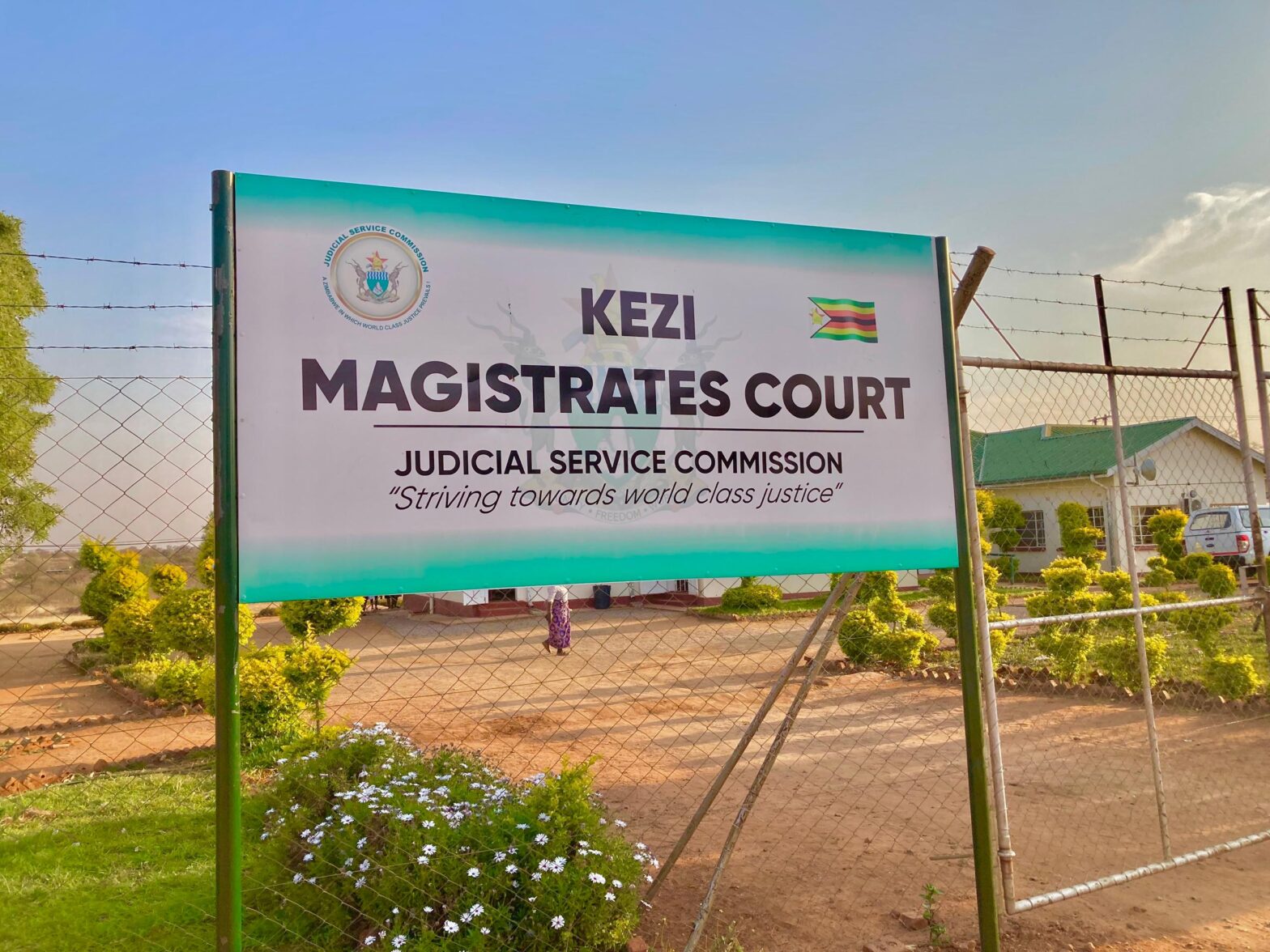
Legal experts and political commentators have condemned the sentiments used by the defense representing police officers accused of brutally assaulting schoolchildren in Mahetshe Primary, Matobo District, invoked Gukurahundi during cross-examination, describing the line of questioning as “misguided, insensitive, and deliberately divisive.”
The remarks came during the trial of three police officers accused of beating pupils at Mahetshe Primary School in May this year, an incident that sparked public anger and calls for accountability within law enforcement.
The trial, which began on September 23, 2025, has already seen emotional testimony from several children and their parents.
However, the community is unhappy when the defence lawyer during questioning repeatedly refers to Gukurahundi, the 1980s state-sponsored genocide in Matabeleland and the Midlands during cross-examination of witnesses.
On this topic
On the first day the case opened, parents who went inside the courtroom with their children said the defence’s questions went far beyond the facts of the assault case.
Read what was said here: Parents demand justice as Mahetshe pupils’ assault case begins
“One of the children was asked if they heard their parents call the police ‘Shona’ and accuse them of Gukurahundi,” said one parent. “But that is false. One of the accused officers is actually a Ndlovu from here. Tribalism has nothing to do with this case.”
When the trial resumed on October 14, 2025, witnesses, including village head Shakespeare Ndlovu and community members Dingindlela Ncube and Felistus Ndlovu — said they were shocked when the defence lawyer again brought up Gukurahundi during questioning.
Read what was said here: Defence denies assault in Mahetshe school case
“They asked if, since the issue of Gukurahundi is still fresh, parents were accusing the police of being Shonas when they saw them approaching the school,” one witness recounted.
Witnesses felt the questioning was an attempt to shift the focus from the alleged police brutality to tribal tensions, instead of addressing the violence inflicted on minors.
In an interview with CITE, a legal practitioner,Dr Vusumuzi Sibanda condemned the defence’s conduct, calling it “misguided and malicious.”
“The issue of the defence bringing up Gukurahundi shows they are aware that the teachers and police abused the children,” Dr Sibanda said.
“You cannot have a whole community concoct a story that children were beaten, the children end up in hospital and then try to deflect by invoking tribal wounds.”
He said the lawyer’s line of questioning betrayed a “guilty conscience” and sought to pre-empt public criticism about the state’s historical treatment of Matabeleland communities.
“The mere fact that they’re talking about Gukurahundi means that they did it and they know it. They are raising it because they know how they’ve historically treated Matabeleland,” Dr Sibanda argued, calling out the defence counsel for potential ethical violations.
“It is unacceptable to raise that against children who know nothing about Gukurahundi because they were not born then. How would children even bring up that issue? It’s nonsense.”
Dr Sibanda added that the defence’s argument reflected a deep-seated bias in state institutions.
“That lawyer is pre-empting what is in the thoughts of her clients, they know they acted out of hatred perpetuated by government practices. It is unacceptable and the law must really put these people away for this, get them fired and put to prison for corporal punishment, which is not permitted in terms of the law anyway,” he said.
Secretary-General of pressure group, Ibhetshu LikaZulu, Mbuso Fuzwayo, said invoking Gukurahundi in a criminal case was “reckless and unethical.”
“It is unfortunate as a country to link a criminal matter with a sensitive subject like Gukurahundi,” Fuzwayo said.
“Gukurahundi is a national subject and I don’t know why lawyers would want to tribalise it.”
He said the defence should have focused on the facts of the assault rather than attempting to racialise or regionalise the issue.
“We expected the lawyer to focus on the assault, which is a criminal matter, not tribal issues or other factors,” Fuzwayo said.
“Assaulting schoolchildren has nothing to do with Gukurahundi. It’s simply a criminal act committed by law enforcement officers.”
He added using tribal language in court not only inflames old wounds but also undermines ongoing national efforts toward reconciliation and healing.
“It is sad and so low for the lawyers to use tribe (as a shield). Literally, they are trying to make Ndebele people sound like they are tribal and everything that happens to them, then link it to Gukurahundi,” Fuzwayo said.
“Assaulting school children or young children has nothing to do with Gukurahundi. If those who assaulted children had a Gukurahundi agenda and were pursuing a Gurahundi narrative, well it is something else but some of us don’t feel it is associated with Gukurahundi it is just a criminal matter done by law enforcement agents.”
Political commentator, Iphithule Maphosa, took a sharper tone, arguing that the incident revealed the persistence of structural discrimination in Zimbabwe.
“…because it indeed is Gukurahundi,” he said, “which in 1987 only changed form , from mass murders into a silent economic, cultural, and emotional genocide.”
According to Maphosa, the defence lawyer’s remarks reflected an entrenched state mentality that continues to treat Matabeleland residents as ‘second-class’ citizens.
“The incident at Mahetshe is just a reminder of what the government system is capable of,” he said.
“They will still get away with another genocide on the people of the region. The lawyer is simply following her clients’ instructions and that instruction is to constantly remind Matabeleland folk to either conform while being marginalised, or re-experience what happened in the 1980s.”
Observers say the case has reopened painful memories in a region still haunted by the Gukurahundi massacres, where an estimated 20 000 civilians were killed in the 1980s during a military operation targeting dissidents.
The government has since launched a community outreach programme to facilitate dialogue, but progress has been slow and the issue remains politically sensitive.
Support CITE’s fearless, independent journalism. Your donation helps us amplify community voices, fight misinformation, and hold power to account. Help keep the truth alive. Donate today





Leave a Reply