
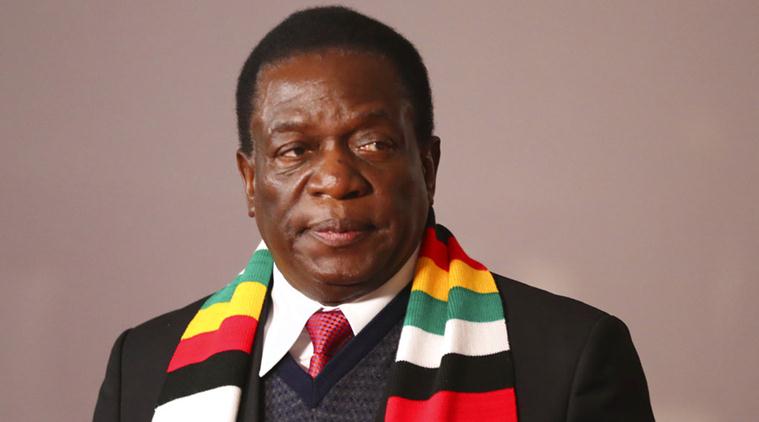
Zimbabwe’s Vice President Constantino Chiwenga has made explosive claims centered on what he called a “treasonous project” allegedly authored by former Information Minister, Professor Jonathan Moyo, dubbed the Breaking Barriers Initiative (BBI), which he says seeks to alter Zimbabwe’s political system and suspend elections until 2035.
Chiwenga also accused individuals he described as “known criminals” of bankrolling President Emmerson Mnangagwa’s 2030 Agenda, claiming that state institutions and the ruling party have been captured by corrupt businessmen operating with impunity.
These claims emerged from an internal document submitted to President Mnangagwa in one of Zanu PF’s recent politburo meetings, where Chiwenga alleged that the so-called 2030 Agenda, believed to involve extending Mnangagwa’s rule beyond the current constitutional limits was “funded and driven” by businessmen who have “brazenly looted our state coffers.”
“The reality which is clearly emerging is that this 2030 Agenda is being funded and driven by known criminals who have brazenly looted our state coffers with impunity and are now using these resources whose capture and control of our Party is unprecedented and deeply worrying,” Chiwenga wrote.
On this topic
READ THE FULL DOCUMENT HERE: https://cite.org.zw/ziyambi-responds-to-chiwenga-read-the-full-document/
The Vice President’s memo, which has since been widely circulated within Zanu PF structures, directly named Kudakwashe Tagwirei, Wicknell Chivayo, Scott Sakupwanya and Delish Nguwaya as financiers of what he called an “unprecedented capture” of both party and state.
“Comrade President, the time for silence and inaction is over, and we cannot allow these criminals who have stolen from our Government coffers and our Party to start using the same resources to bribe fellow comrades and our structures to get their support, defend and protect them,” Chiwenga charged.
Chiwenga’s most explosive claim centered on what he called a “treasonous project” allegedly crafted by Prof Moyo, dubbed BBI.
He alleged that the initiative sought to alter Zimbabwe’s political system and suspend elections until 2035.
“Comrade President, you recall I brought to your attention the treasonous project which has been penned by Jonathan Moyo for our Parliament to implement, the so-called Breaking Barriers Initiative, which is seeking to change our political system and suspend elections to 2035,” he wrote.
“Not only is this project treasonous and a huge scandal, and it’s being done and championed by people like Jonathan Moyo, who we fired from the Party. This Breaking Barriers Initiative has also never been discussed and approved at the Party’s last Congress, nor has it ever been discussed and approved by the Central Committee. We are now watching in shock and disbelief as this project is now being covertly implemented and being funded by these criminals, Kudakwashe Tagwirei, Wicknell Chivhayo, Scott Sakupwanya, and Delish Nguwaya, and their associates.”
He argued that such covert political engineering undermined Zanu PF’s founding principles and reversed the “spirit of Operation Restore Legacy,” the 2017 military intervention that ousted former President Robert Mugabe and elevated Mnangagwa to power.
However, Zanu PF’s Secretary for Legal Affairs, Ziyambi Ziyambi, dismissed Chiwenga’s claims as unfounded and “regrettable.”
He insisted that the Breaking Barriers Initiative was not a clandestine plot but rather a proposal originally circulated by the opposition in Parliament.
“This is very strange and exposes a lot of covert shenanigans. It is surprising how the writer got hold of the Building Bridges Initiative (BBI) document if it was meant for Parliament,” Ziyambi wrote in his rebuttal.
“This tendency of stalking officials who are carrying out their duties is regrettable. There is nothing treasonous about improving a political system. This BBI, which is being referred to, is not strange to us, and it’s actually promoting nation building and cohesion as compared to the author’s divisive and inciteful document.”
Ziyambi revealed that the BBI had been brought to his attention by opposition leader Sengezo Tshabangu “in the company of a General Khumalo from the Vice President’s Office.”
“The BBI is an opposition document which was initially brought to my attention by the leader of the opposition in Parliament, Sengezo Tshabangu, in the company of a General Khumalo from the Vice President’s Office. As a Party, we should appreciate the relationship with the opposition, which has been beneficial to us. There is no proof whatsoever that the BBI Project is being funded by the named individuals,” Ziyambi said.
Chiwenga also questioned Mnangagwa’s constitutional fidelity, warning that attempts to extend the President’s term through the 2030 Agenda mirrored the excesses that triggered the November 2017 military intervention.
“Comrade President, on several occasions and even abroad, you have informed the nation that you are a Constitutionalist, and yet it is now clear for anyone to see that the so-called 2030 Agenda to extend your term of office is real and alive, and this has now taken us back to the ills that led us to November 2017,” he wrote.
Ziyambi countered that the 2030 Agenda was not a clandestine project but an official resolution of Zanu PF’s 2024 National People’s Conference, where delegates endorsed it as Resolution Number One.
“Indeed, the President is a constitutionalist who has not deviated from the Constitution at any time. However, if the people have spoken, should the President disregard the will of the people?” Ziyambi asked.
Ziyambi argued that the resolution emanated from the party’s constitutionally mandated processes and that amending the national Constitution, if pursued, would be perfectly lawful.
“There were thirty-one (31) resolutions emanating from the last Conference, and Agenda 2030 was resolution number one (1). The people through the Conference came up with these resolutions as per their mandate in terms of the Constitution. There is, therefore, nothing unconstitutional about it. Furthermore, section 328 of the national Constitution allows for the amendment of the Constitution, and there is nothing illegal about amending or seeking to amend the Constitution,” he said.
Ziyambi went further to accuse Chiwenga of ignorance of legal provisions and of attempting to “destabilise the Government on the basis of falsehoods,” calling such conduct “tantamount to treason.”
Responding to Chiwenga’s accusation that the 2030 Agenda was funded by “known criminals,” Ziyambi dismissed the statement as emotional and defamatory.
“Again, the denial narrative of the Conference resolution and the lack of appreciation of the ZANU-PF Constitutional procedure is apparent in this paragraph,” Ziyambi said.
“Whoever is running with the 2030 Agenda resolution is doing so in compliance with Resolution number one (1) of the 2024 Conference. This is an emotional statement precipitated by denial and is contemptuous of individuals who have never been tried in a court of law. To label anyone a criminal before they are tried and convicted is defamatory.”
He defended the practice of receiving support from business figures, arguing that Zanu PF had always relied on private contributions.
“There is nothing criminal about receiving funding for our revolutionary Party from the business community and well-wishers, a practice which the Party has been associated with since time immemorial. These reckless utterances can lead to our business people refraining from supporting the Party,” Ziyambi
Chiwenga also accused the same businessmen of “polluting” the concept of party affiliates, groups formed to support Zanu PF’s programmes, alleging they had “hijacked” the structures and made them more influential than formal organs.
“Furthermore, Comrade President, these criminals have polluted the concept of Affiliates that we set up to support the Party. The clear intentions that we had of how these Affiliates should complement the Party have now been completely hijacked by these criminals, and we are now seeing Affiliates being more resourced and becoming more powerful and influential than our Organs of the Party,” Chiwenga wrote.
However, Ziyambi dismissed this as another case of “denial syndrome.”
“This is further evidence of the denial syndrome I have been referring to throughout the document,” he said.
“The issue of affiliates is under the purview of the Commissariat. The matter was comprehensively presented by the National Commissar, and no one challenged it, resulting in it being adopted by the Politburo. So how can the so-called criminals hijack a process that has been endorsed by the Politburo and is reported in the reports of the National Commissar?”
He added that party affiliates were not a new phenomenon, saying similar structures existed as far back as 2008.
“The truth of the matter is that there is disdain and anger toward resolution number one (1) by the author, which is apparent throughout the document.”
Chiwenga’s memo urged President Mnangagwa to confront what he described as a creeping capture of the ruling party and the state.
“The time for silence and inaction is over, Comrade President … we must immediately prioritise cleaning our house, reclaim our State and our Party … from the capture by … Tagwirei, Chivhayo, Sakupwanya, and Nguwaya and their associates.”
Support CITE’s fearless, independent journalism. Your donation helps us amplify community voices, fight misinformation, and hold power to account. Help keep the truth alive. Donate today







Leave a Reply