
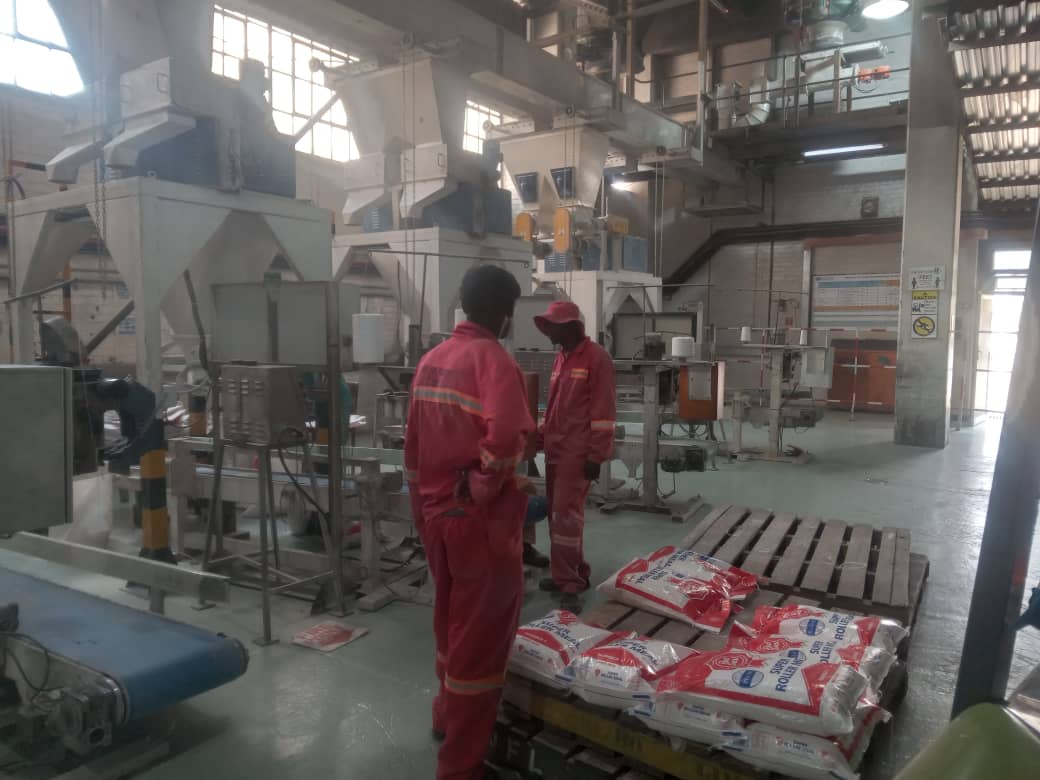
One of Zimbabwe’s largest milling firms, Blue Ribbon Foods, has suspended operations at its Bulawayo plant after exhausting maize supplies, in a move that raises fresh questions over the government’s claims of grain self-sufficiency.
The shutdown was confirmed during a plant visit on Monday, where company officials revealed production had stopped in April due to the scarcity of maize.
This development contrasts sharply with public assurances from President Emmerson Mnangagwa and Agriculture Minister Anxious Masuka that the country is enjoying a surplus.
In May, Mnangagwa told a Zanu-PF Central Committee meeting that good rains had paved the way for a “bumper harvest.”
On this topic
Minister Masuka later announced a cereal output of 2.9 million tonnes, above the 2.2 million tonnes needed annually.
On the ground, however, millers say maize is increasingly hard to find.
“At the beginning, we were able to buy from local farmers and the maize was there,” said David Moyo, chairperson of the Grain Millers Association of Zimbabwe (GMAZ) Southern Region. “But now, it is hard to fill a 30-tonne truck. Sometimes you get three or two 50kg bags a day. It takes a week to fill a truck.”
To ease the shortages, authorities recently allowed private firms to import maize. But a new statutory instrument has added to the difficulties, requiring millers to pay a levy based on the price difference between imported maize about US$300 a tonne from South Africa and the domestic price of US$200 a tonne. The surcharge is collected by the Agricultural Marketing Authority (AMA).
Moyo said the measure was counterproductive: “The statutory instrument is unfair and costly. Eventually, the burden will be passed on to the consumer. We are simply asking the government to allow millers to import maize freely, without these added levies, as was previously the case.”
He argued that freeing up the import framework would reduce production costs and benefit consumers.
“The private sector is here to complement the government. We are partners in ensuring that no Zimbabwean goes hungry in line with the President’s own promise that no one will be left behind,” he added.
Support CITE’s fearless, independent journalism. Your donation helps us amplify community voices, fight misinformation, and hold power to account. Help keep the truth alive. Donate today





Leave a Reply