
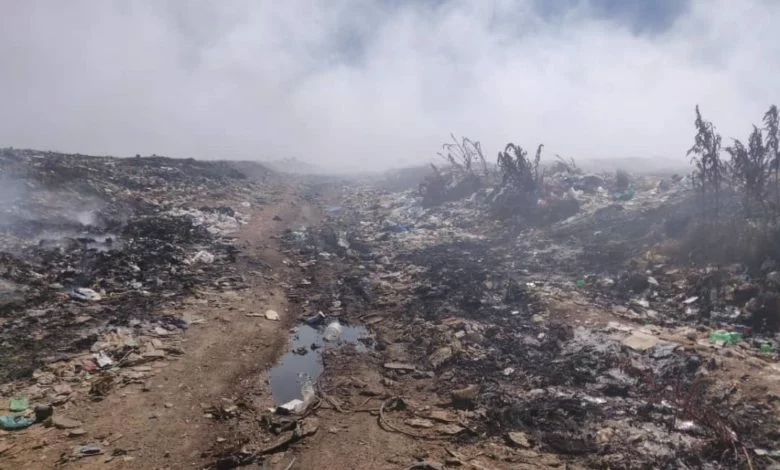
Every night, Kayleen Dube closes her windows tightly, but the smoke from Ngozi Mine dumpsite still seeps into her home. By morning, her children wake up coughing, and her elderly mother often complains of chest pains and headaches.
For Kayleen and many other residents of Cowdray Park in Bulawayo, toxic smoke from the city’s main dumpsite has become an unavoidable part of life.
“Children and the elderly are the most affected, and sometimes we cannot even open our windows because of the smell,” she said. “At night the smoke is worse, it covers the whole area and we are forced to breathe it in while we sleep. Many people now have constant coughs, headaches, and chest pains. We are living in fear because we do not know what this smoke will do to our health in the future.”
Ngozi Mine is now Bulawayo’s biggest landfill, but its poor management has turned it into a health hazard. Thick smoke and recurring fires engulf nearby homes, leaving families to live in conditions residents say would not be tolerated elsewhere in the city.
On this topic
“We keep hearing promises but nothing changes,” said Memory Ncube, another resident. “The smoke is dangerous, people have asthma and chest problems now, and still there is no action. For years we have been told that the council will fix this problem, but every time they say something, nothing is done. It feels like we are forgotten people… We are also citizens who deserve clean air and a safe environment.”
Residents say the situation has persisted because the dumpsite lacks the proper equipment and infrastructure to manage waste safely.
Without compactors, firebreaks, or proper waste separation, fires are reignited frequently, often by scavengers burning rubbish to extract metals, while methane gas from decomposing waste fuels further combustion.
Michael Ndlovu, who is raising his family near the dumpsite, said living conditions had become unbearable.
“People are struggling because of the pollution. We are breathing in toxic air every day, and the fires at Ngozi Mine never stop. Our children are growing up in a dangerous environment and the council must take this seriously,” he said.
Ward 28 councillor Ntandoyenkosi Ndlovu has acknowledged the scale of the problem, describing it as a major health hazard.
“We don’t know the long-term effects of the smoke from Ngozi Mine, and we need a lasting solution. We proposed to the city council that if the mine is causing problems, it should be relocated away from residents, but they said it would cost about US$4 million. Environmentalists suggested that we focus on compacting the waste at the mine. We support this, as proper waste management will reduce burning and smoke, protecting residents’ health,” he said.
The councillor also pointed to opportunities in reimagining the landfill as an energy resource.
“There is methane gas at Ngozi Mine, and over the years burning waste has only made the problem worse. But if we do proper waste separation, recycling, and set up a waste-to-energy plant, the site has the potential to produce a lot of electricity. Whatever investment comes must also benefit the community,” he added.
Environmental experts have urged the city to pursue a mix of immediate and long-term solutions. In the short term, compacting waste, covering it with soil, and creating fire suppression systems could reduce smoke levels.
Longer-term strategies include developing a waste-to-energy facility and gradually relocating the landfill to a safer distance from residential areas.
A recent report from the Health, Housing and Education Committee indicated that the Town Clerk Christopher Dube, had advised councillors that central government had issued directives for all local authorities to manage landfill sites, following Harare’s Pomona model.
“Local Authorities were required to copy the City of Harare landfill site model being managed by POMONA (pvt) Ltd. Energy was being generated from waste at Pomona landfill site. A lot of companies had indicated an interest in the management of the City’s landfill site at Richmond. The issue would be tendered out inline with PRAZ and ZIDA regulations. Once the tendering process was done and finalised, the landfill site would be properly managed,” the report read.
Support CITE’s fearless, independent journalism. Your donation helps us amplify community voices, fight misinformation, and hold power to account. Help keep the truth alive. Donate today




Leave a Reply