

By Paul Sixpence
OF late the government has shown renewed interest in addressing drug and substance abuse challenges in Zimbabwe. Recent government efforts were headlined by President Emmerson Dambudzo Mnangagwa’s launch of a US$77 million national resource mobilisation campaign on 11 July 2025 with a call for collaborative efforts in addressing substance abuse.
Substance and drug abuse is spiraling out of hand with quick reminders of Zimbabwe’s struggles with the HIV pandemic in the 90s. Almost every household has a drug problem or everyone knows someone whom is a substance and drug user.
Government policy or lack thereof?
On this topic
On the policy front, Zimbabwe’s national response to drug abuse is guided by the Zimbabwe National Drug Master Plan (2020-2025) which focuses on reducing the supply and demand of drugs and lists harm reduction interventions as a strategy to address substance abuse.
Beyond policy national policy documents, the State’s response to substance abuse has been through criminalisation and punitive approaches towards drug users through the Dangerous Drugs Act [Chapter 15:02] and the Criminal Law (Codification and Reform) Act (Chapter 9:23, Section 156).
During the course of this week, Engineer Tafadzwa Muguti, the Permanent Secretary for Presidential Affairs in a rare but strong public rebuke towards drug users re-enforced government’s punitive approach towards drug users.
“Parents or guardians should take youth drug abusers to provincial drug rehabilitation centres, where they will be admitted for seven months without contact or visits from parents during that period,” thundered Eng. Muguti. “Straight after that, without going back into communities they will be enrolled for national youth service where they will undergo physical and ideology training. Thereafter, they will be enrolled for skills training at vocational training centres.”
Eng. Muguti’s drug user rehabilitation policy pronouncements largely went unnoticed as the nation focused on his purported ban of tint on private and commercial vehicle windows.
However, Eng. Muguti’s remarks did not escape the attention of harm reduction advocates and experts.
“Knee jerk policy pronouncements are not the solution, said Wilson Box, Executive Director at the Zimbabwe Civil Liberties and Drug Network. “We have a constitution which defends and also is clear on peoples’ rights. You cannot force someone to do what they do not want to do.”
Eng. Muguti’s policy pronouncements have since been pulled down from State broadcasters news sites.
Drug abuse as a public health rather than a criminal issue
Harm reduction advocates have long called for the decriminalisation of drug use to enable people who use drugs to seek help and services without fear of criminalisation, with the government being urged to focus on drug supply chains.
“Drug use is not a criminal issue but a public health concern. We should take this issue as such and not as a pedestal for political expediency. Drug use challenges in Zimbabwe are a clear example of policy failure. We see the incarceration of small fish(drug users) whilst the big fish, the suppliers go scott-free,” Wilson Box further added
In a study conducted by psychologists and clinicians from the universities of De Montfort (United Kingdom), Wisconsin Greenbay (United States of America) and the University of Zimbabwe in 2013, titled, “ Understanding the nature of substance use in Zimbabwe: State of the art and ways forward,” they stated that,to enable duty bearers to effectively implement harm reduction programmes, there is need to establish a national monitoring system that will clarify the nature and extent of drug and substance use disorders in Zimbabwe.
“… there is a lack of clarity of the nature and extent of substance use and substance use disorders (SUDs), which in part is due to a lack of a national monitoring system for substance use in the country. Moreover, reports of a substance use crisis in Zimbabwe are predominantly based on anecdotal evidence, limiting the ability to gain an accurate picture of the situation,” the research led by Dr. Blessing Marundure highlighted.
Despite the country formulating the Zimbabwe National Drug Master Plan in 2020, it still yet to be operationalised and costed as a harm reduction interventionist tool. Despite the plan lapsing this year (2025) the country is yet to establish health indicators, interventions and monitoring systems for drug users.
Resourcing and costing substance abuse interventions
President Mnangagwa set the tone on the mammoth task facing the nation interms of resourcing substance abuse interventions when he launched the US$77 million national resource mobilisation campaign terming drug abuse as “a growing public health, social and security threat.”
Without financial resources, efforts to reverse the spectre of drug abuse in Zimbabwe may just be impossible.
“Without funding we will not be able to fund for furniture, medicines and other items required to run a [drug] rehabilitation centre,” said Senator Charles, Minister of State Harare Metropolitan Provincial Affairs and Devolution during a recent media engagement launching Harare’s fundraising drive. “We invite all sectors – churches, NGOs (non-governmental organisations), business people, politicians, members of parliament and other bodies that are interested.”
Recent large scale international development aid funding cuts fronted by USAID have cut harm reduction services at the knees with devastating effects on drug and substance users. Drug use intervention programmes are being defunded, frontline services are disappearing with the net effect of putting peoples’ lives at risk. USAID funding to Zimbabwe has been cut by US$83 million.
Can community led and focused interventions be the panacea?
Community leaders are advocating for community-based strategies to reach out to people who use drugs, centering peer led community interventions.
“There are different types of drug abusers, we have those who take drugs because of peer pressure and those who take drugs because of frustration in life,” said Councillor Edwin Ndlovu, Ward 8 Councillor and Bulawayo’s Deputy Mayor. “All drug users should be assisted by keeping them busy through education, self-help projects, sports and arts. That is why in my ward, the ward retention fund is earmarked to rehabilitate sporting facilities.”
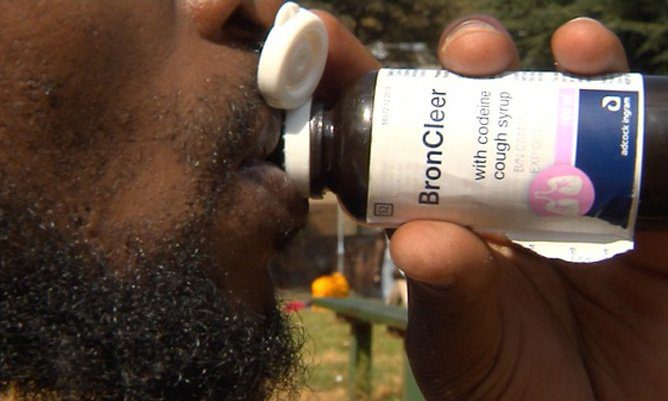
According to the Ministry of Health and Child Care, commonly abused drugs arecodeine, methamphetamine or crystal meth (commonly known as meth, speed, mutoriro, ice, guka), broncleer (bronco), solvents (glue, fembo and genkem),chlorpromazine (maragado, mangemba), cane spirit (njengu or kambwa), cocaine and cannabis (mbanje).



Leave a Reply