

By Praise Dlakama
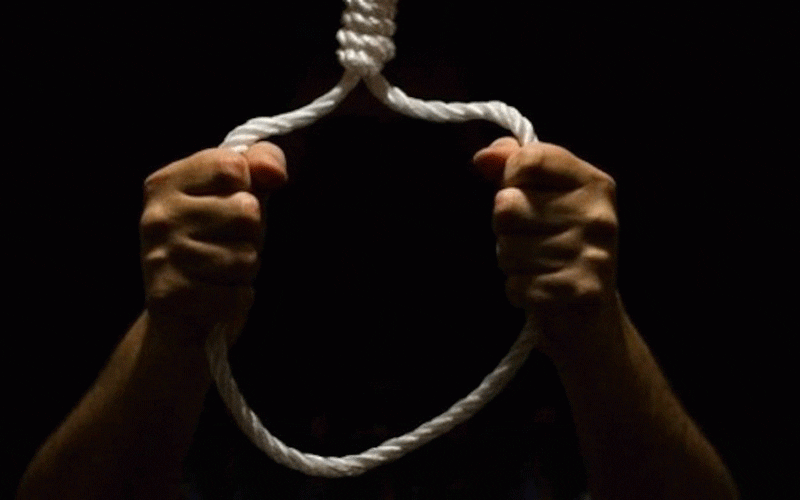
It is a tragic irony that Zimbabwe woke up recently to the news of a local businessman who shot himself in a suspected suicide. This devastating event is made even more compelling by its timing: we are only a few days into September, which is globally recognised as Suicide Awareness Month.
I was particularly struck by a quote in The Chronicle from one of the man’s friends upon hearing the news: “He was a jovial guy, and in hindsight, maybe we should have taken away his pistol and encouraged him to speak to someone about the problems he was facing.”
This is a bitter pill to swallow because this sentiment is so common in the aftermath of loss. Suicide remains one of the leading causes of death globally, and it is a crisis that demands our attention. This month especially serves as a stark reminder that we are, indeed, our brothers’ and sisters’ keepers.
On this topic
The friend’s regret, that they should have encouraged him to speak, is what we always hear after disaster has struck. The pressing question is: what must be done, particularly for young boys and men, to help them feel safe to open up and share their problems before it’s too late?
The popular and damaging notion among men is that discussing emotional struggles is a sign of weakness. This is a lesson many of us learned young.
I remember growing up that if you fell and hurt yourself as a boy, elders would say, “Don’t cry. A man doesn’t cry.” You learned to suppress the pain, to maintain calmness until it subsided. This toxic culture teaches men to bottle things up no matter how much it hurts.
The stigma and stereotypes facing men who open up about their challenges can feel insurmountable. Tragically, this often leads some to choose what they perceive as the only way out.
According to research by the NIH, suicidal behaviour is a major health concern worldwide, in both developed and developing countries. It is estimated that over one million people die by suicide annually globally. This is not a distant issue; it is a present and urgent crisis.
Now more than ever, the world needs more kindness, tolerance, and open-mindedness. Noticing that a child, friend, brother, sister, or colleague is not okay is everyone’s responsibility if we are to be honest about battling this scourge.
This requires a holistic approach. Everyone needs to understand mental health. In many African communities, a common and detrimental misconception is that young people cannot be stressed if their basic needs are met. This narrative undermines all mental health awareness efforts. We must understand that mental health issues can affect anyone, regardless of age, gender, or background.
I recently came across a poignant comment from a LinkedIn user following the suicide of a 12-year-old. The user wrote: “Be friends with your siblings… We are the future mothers… I think a quarter of my classmates from Ordinary Level are now married, can we please show love to our kids?… There are scary topics I can’t discuss with my parents… but I’d definitely love to erase that line when I have my baby girl or boy.”
This is the key. For future parents and as a community, we must change the narrative. We must provide platforms where children can also open up without fear of judgment.
The solution lies in the future, but the work must start now. For this to be achieved, everyone; parents, elders, friends, and community leaders, must play their part. We must actively dismantle the stigma that silences pain and replace it with empathy and open dialogue.
As we mark Suicide Awareness Month, let this be a loud call to action for everyone. Let us all honour those we have lost by becoming more vigilant, more compassionate, and more willing to talk about mental health. Let’s check in on the ‘jovial’ friends, challenge these outdated stereotypes, and encourage each other to speak openly. This month, and every month thereafter, we should all commit to being the listeners who can help prevent another tragic headline in the newspapers.
Support CITE’s fearless, independent journalism. Your donation helps us amplify community voices, fight misinformation, and hold power to account. Help keep the truth alive. Donate today



Leave a Reply