
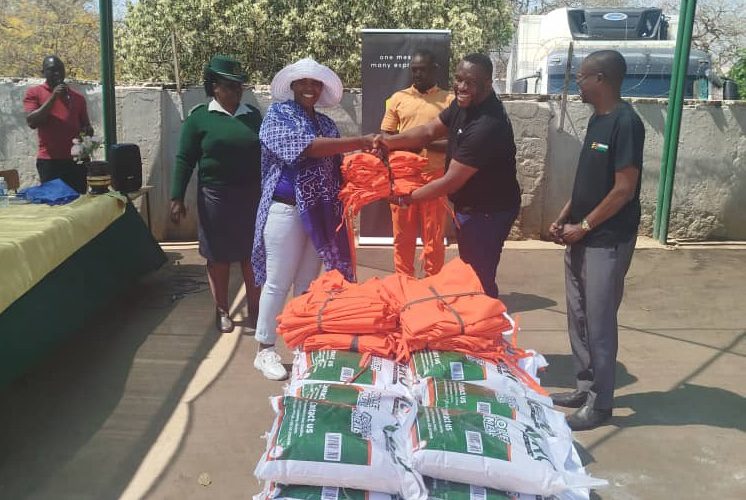
Prison officials at Khami Maximum Prison in Bulawayo have appealed to corporates, churches, and communities to extend material and moral support to inmates, stressing that rehabilitation requires collective effort beyond the prison system.
Superintendent Mahlathini of Khami Prison told CITE that inmates should not be forgotten or stigmatised after serving their sentences, noting that society has a crucial role in their reintegration.

“Inmates remain our relatives. Let’s love them, let’s visit them. Where they come short and where prison services come short, let’s fill the gap. Prison services cannot do it alone—let’s put our hands together and assist our brothers inside, whether materially, spiritually or psychologically,” he said.
The remarks came as Love Zimbabwe, in partnership with the Global Network of Evangelists, donated 60 prison uniforms and 76 bags of 10kg mealie meal to the facility. Mahlathini said the support was timely as some inmates lacked adequate clothing.
On this topic
He also urged employers not to discriminate against former prisoners, arguing that rehabilitation equips them with skills and responsibility.
“Being in prison does not have qualifications, you may also end up in prison. My encouragement is that when prisoners are released back to society, people must understand they have gone through correction. They can be more trustworthy than someone who has never been to prison because they have seen their mistakes and been corrected,” he said.
Reverend Danisa Dube of St David’s Anglican Church, who attended the donation event, said the church’s role was to remind inmates that they remain part of the community.
“We saw it fit that we visit the inmates and donate resources so that they feel they are human like us, even though they are in cells. God’s word is about love and hope, being in prison does not mean God does not love you,” said Dube.
He added that inmates themselves were conscious of their responsibilities and eager to start afresh once released.
One prisoner told him he had lost his job after being jailed and hoped to return to work to provide for his family after serving his sentence.
“This means prisoners know their responsibilities as human beings. After their sentence, corporates and communities must help them restart their lives and take care of their families. Companies and communities should consider creating projects specifically for former inmates,” Dube said.
Support CITE’s fearless, independent journalism. Your donation helps us amplify community voices, fight misinformation, and hold power to account. Help keep the truth alive. Donate today






Leave a Reply