


Bulawayo is grappling with a growing number of its own children living and working on the streets, a shift from the past when the city mainly received street children from other parts of the country.
Child protection organisations and social workers are sounding the alarm and asking questions – what is pushing children out of their homes or why children who are so close to home are moving to live on the streets permanently.
These children come from homes in places like Makokoba, Cowdray Park, Mbundane, Nkulumane and Burnside.
In the past, children living and working on the streets of Bulawayo were mostly from places like Masvingo, Beitbridge, Binga, Mutare and Nkayi, according to the social workers.
On this topic
Today, the faces on the streets are increasingly local, prompting social workers to seek to understand what is breaking down families and communities across Bulawayo.
Sikholiwe Ncube, Bulawayo Provincial Coordinator for Scripture Union Zimbabwe, which runs the Thuthuka programme for vulnerable children, said this shift in street child demographic was concerning.
“Long back, we used to have children coming from Masvingo, Mutare, Beitbridge, Binga, so many were coming to Bulawayo. Even some of us who didn’t know Shona learnt it from the streets because so many children were coming from Shona-speaking areas,” she said during a project visit organised by the National AIDS Council (NAC).
“Now we have a challenge with children from our own communities, children from around Bulawayo. These are the ones flooding our city. Now we rarely have children coming from afar but mostly it’s now children from Makokoba, Cowdray Park, Mbundane.”
Ncube said it was not clear whether parenting, social breakdown, or lack of awareness is the cause.
“We are asking ourselves what is happening and how we should tackle this as a community in Bulawayo,” she said.

CITE sought to find out why Bulawayo’s own children were ‘flooding the streets.’
Critical Studies scholar, Dr Khanyile Mlotshwa, suggested the situation is symptomatic of broader social collapse.
“This may be an urban phenomenon where young people seek a living. Nevertheless, the family is clearly in a crisis,” he said.
“The best place for a child is their home, even if it is a one room, and not the streets, even if it’s a New York street paved with gold.”
Mlotshwa said children are, however, pushed to the streets because there are no parents at home or there is no love at all at home.
“When children no longer feel like they belong, they decide to go to the streets and take a shot at life from there,” he said.
Bishop Handsome Ncube of Glory Emmaus Ministries International believes the transformation of Bulawayo into a major city is attracting children who seek economic opportunities.
“This current situation reflects the reality that Bulawayo is first becoming one of the regional big cities. Harare has in the last few years been that city, but Bulawayo has fast caught up in terms of pace,” he said.
“What we are experiencing is a lot of people searching for economic avenues they can exploit for a living, including young people.”
Bishop Ncube said that the collapse of the extended family system has also left vulnerable children without a safety net.
“The same economic pressures mean families cannot support children to a certain extent. The concept of extended families is disintegrated. We don’t have individuals extending their hand to take care of children that are left behind, don’t have parents or that don’t have guidance,” he said.
“In fact, guardianship is a fast disappearing element or prospect. You don’t find guardianship because economic pressures have pushed people to that place where they cannot entertain more than a certain number of mouths.”
A resident from Emthunzini, Emmanuel Sibanda, said reasons why children end up in street situations vary.
“Some are pushed by poverty, others are pulled by the promise of fast cash or freedom while some are escaping abuse,” he said.
NAC Programmes Officer, Douglas Moyo, also raised concerns about the breakdown of family structures and its impact on vulnerable children, particularly those living and working on the streets.
Recalling a troubling case, Moyo said: “One incident where one boy was interviewed some time ago and had a sexually transmitted disease, blamed his parents for not reprimanding him when he was naughty or running into the streets.”
Moyo said during a recent child protection meeting in Bulawayo, organisations working with street children reported some children run away from institutional care, while others are abandoned there by their families.
“They are trying foster parenting,” he noted, “but in African culture it has not yet been fully taken.”
Moyo also questioned whether current family dynamics allow for broader communal caregiving.
“As parents we are raising a child that can be raised by your siblings. Looking at the way we bring up our children, when you die, can your relative take over and bring up your child? Family parenting is another issue that needs to be looked at.”
He added that modern family life has become too isolated, weakening ties with extended family.
“We are so nucleus that children now have no relationship with your sister, or uncles and don’t even know their history, don’t know relatives and don’t even respect them,” Moyo said.
“The children cannot be disciplined either because we have spoiled them or loved them too much and cannot get that love from relatives.”
Another issue raised by a child protection activist and social worker with Thuthuka, Best Ndlovu, is some children are not yet fully street-based but are in a troubling phase of transition, moving to streets permanently.
Some leave home during the day to work or beg and only return at night, a routine that gradually pulls them deeper into street life.
“While they work on the street for their grandmothers, working as breadwinners, some just work for themselves. Some are in transition to becoming a street child because they enjoy being on the streets, because of the independence they get on the streets,” she said.
Ncube, the provincial coordinator, explained a child’s behavior indicated they were transitioning from simply working to becoming street-based.
“You meet a child in the morning while doing street outreach around 8am. They’ll tell you, ‘There is hot sitting at my school, I will go later at 12.’ At 4pm, you meet the child again on the street and ask if they went for their lesson. Maybe it’s a child coming from Cowdray Park, and the child will say ‘yes,’ but you calculate the fare involved, moving from town to Cowdray Park and coming back again,” she said.
“Later on, you do a night visit to map the city and see what’s happening around children and young people living and working on the streets. Then you meet that child again, and they’ll say, ‘Sister, I will still go back home,’ yet the time is around 9pm or 10pm, and you can tell there’s an issue there.”
Ncube said such children may follow this routine for two or three days until they are invited to the contact centre where their information is recorded.
“There are quite a number of reasons why children transition to streets. Sometimes it can be delinquent behaviour. Sometimes there’s really a need at home that’s not being met, or the child has dropped out of school. Or the child started off escorting a parent living with a disability and found street life to be a bit more interesting than being at home,” she said.
“The child will sneak out of home, come to the streets and beg because he has seen that he can get alms here and there. Or he’s learned the street lingo, knows how to make his way into the streets and tries to survive. We have those children, and eventually, they make the street their place of habitat for some time.”
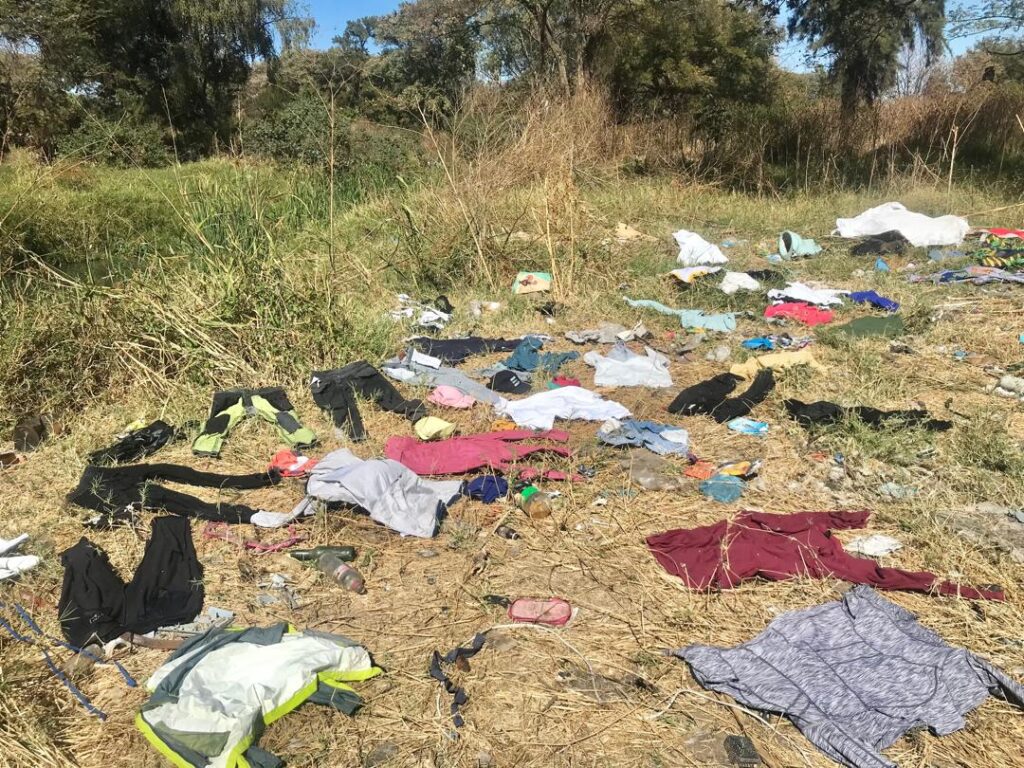
Ncube said after transitioning to street life, children often move quickly to other cities.
“You may get a report or a call from an organisation working with street children in Harare saying, ‘We have a child from Mbundane,’ and you realise it’s the same child who once told you, ‘I go back home.’”
The majority of children living and working on the streets are boys. While the reasons are not fully understood, some boys say they feel less valued at home.
“What we have seen and according to our database, we have more boys on the streets compared to the girl child or girls on the streets,” said the provincial coordinator.
“From the few interviews we’ve done with the boys, they have said, ‘Families have a gender preference, they prefer girls to boys.’ It’s easier for parents to say to the boy child, ‘Go and sell,’ as compared to saying that to the girl child. We don’t know how true that is because we have not talked to the parents.”
Scripture Union operates a drop-in centre where children can bathe, do laundry, eat hot meals, and receive basic psychosocial support or even go to their territories or bases where they stay .
The centre becomes a lifeline, and for some, a doorway back to their families.
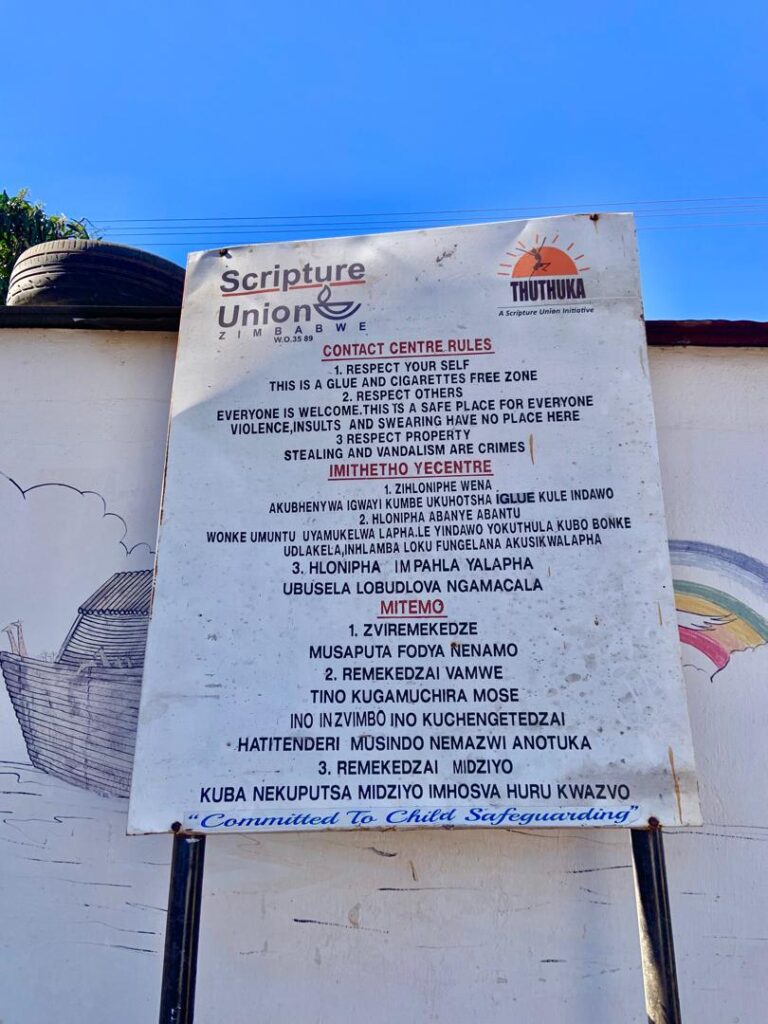
“As they come for the services, that’s our basic contact to know who we are dealing with and their different backgrounds. You think every child is a juvenile delinquent or truant, but when you interact with them, you realise the child needs assistance to mediate with the family. Maybe the child has lost a cow and needs one to negotiate with the family. We unify that child back to their families.”
Ndlovu added: “We work with the Department of Social Development to reunify children. We manage to create contact and relationships, where the child is able to say, ‘I was raped by my mother, that’s why I came to the street,’ or, ‘I was abused by my grandmother.’”
“All those activities feed into them saying they want to go back home. They make that decision on their own. If you force them to go back home, they return to the street.”
Ndlovu said reunifying children only works if the home environment is repaired as well.
“Whilst waiting for them to change their decision, mindset, and behaviour, we are also working with the family where there’s no peace. You can’t reunify that child to go back home without solving that poverty or fixing the poverty at home.
“Some stay with a grandmother, or it’s a child-headed family. Others dropped out of school, they are doing nothing, the next activity is to come and sell on the streets.”
What also alarmed activists is the silence from communities after children leave home.
“Another challenge is the lack of missing person reports,” said the social worker.
“Most of these reports help if you reach out to police or us directly because we’ll know a child is missing in a certain area. But if the community doesn’t assist the grandmother in locating the child, that child will end up becoming a street father from a tender age into adulthood.”

Thuthuka also runs life skills programmes, sport-based conflict resolution sessions and peer support dialogues, including “brother-to-brother” and “sister-to-sister” talks to help children process trauma and reduce risky behaviour.
Since 1995, Thuthuka has reached more than 5 000 children living and working on the streets and around 170 yearly.
Some of these children have gone on to become teachers, lecturers, media interns, even PhD holders.
“We don’t name them because you may victimise them,” Ndlovu said.
Rehabilitation includes helping children return to school, access BEAM support, get food hampers for their families, and also access birth certificates and IDs.
“We also teach them their rights. If they’re arrested, they must know how to ask for help,” Ndlovu added.”
As Bulawayo reckons with this crisis, social workers urge the public not to shame children or romanticise their suffering.
“Every activity that we do transforms children moving from the streets. Some may ask, ‘why we give them food, claiming it will fuel their stay on the streets.’ But as a Christian organisation, we also do ministry. Just like by giving food to prisoners you are not promoting them to fill up prisons but we are reaching out not only with food but more,” Ndlovu said.
At CITE, we dig deep to preserve the stories that shaped us—ZPRA Liberation Archives, the DRC War, and more. These are not just stories—they’re our roots. We don’t hide them behind paywalls. We rely on you to keep them alive. Click here to donate: https://cite.org.zw/support-local-news/




Leave a Reply