

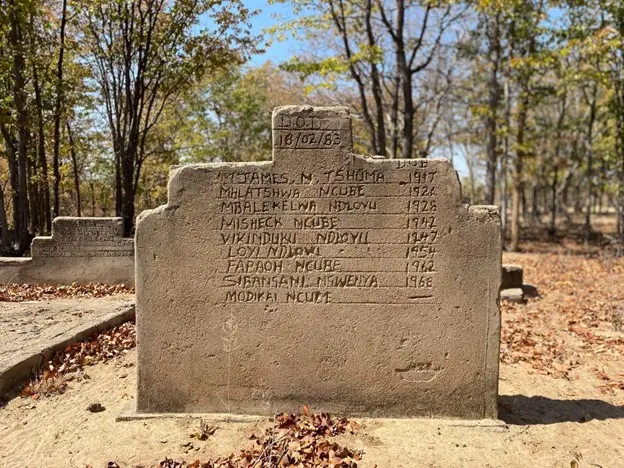
ZPRA Veterans Association Deputy Chairperson, Grace Noko, has strongly criticised the ongoing Gukurahundi community hearings, describing them as divisive, exclusionary and poorly conceived.
Speaking in an interview with CITE, Noko questioned why the government was limiting the hearings to Matabeleland when atrocities also took place in the Midlands during the 1980s genocide.
“With this Gukurahundi process, the government has divided people,” Noko said.
“Now only people in Matabeleland are the ones supposed to talk, yet people in the Midlands were also hurt but there won’t be hearings there. Why has the government stopped them from happening in that region? If there are to be no hearings, then let there be no hearings everywhere. If the process is open and people must talk, let everyone talk. Why separate people? Why?”
On this topic
Community hearings into the Gukurahundi genocide led by traditional leaders and supported by a 14 member panel, are currently underway in villages, supposedly across the whole of Matabeleland North and South.
The initiative, endorsed by President Emmerson Mnangagwa, aims to address long-standing grievances related to state-sponsored violence that left thousands dead, displaced, or traumatised.
However, for Noko, the selective rollout of the hearings raises serious questions about the government’s sincerity.
“As ZPRA, our members are all over the country. Someone could have been a ZPRA cadre, born in Mutare, worked in Bulawayo and encountered Gukurahundi because they were ZPRA,” she explained.
“Now that person is back in Mutare, where should they speak out? Should they board a bus to come to Matabeleland just to be heard, yet their own region has no hearings at all?”
Noko stressed the need for a truly national approach, arguing that limiting participation undermines healing and reconciliation.
“This must be nationwide, people must be free. But now people are not free. They have been chosen to say these ones will speak, those ones won’t. This was a genocide, and just as we read about what happened to Lobengula, the same will happen, people will know what happened here in Matabeleland,” she warned.
Noko also slammed the government’s recent announcement that it would consider compensating Gukurahundi victims, saying the idea lacked emotional sensitivity and a clear moral foundation.
“This is a painful process,” she said.
“If we are to analyse this issue of compensation for someone who has died, someone now crippled or physically challenged and who needs care every day , it is very painful. What is the compensation for?”
She added that without acknowledgment of guilt and formal apologies from perpetrators, money alone was meaningless.
“If you are to spend this compensation money, what reference are you using to explain that spending? How will you describe to others what that compensation is for? It is important for the perpetrators to apologise,” Noko said.
She accused the government of using the process as a political convenience rather than a genuine reconciliation effort.
“What is happening now is simply closing people’s eyes. This is why Zimbabwe is so poor, we take shortcuts instead of doing things holistically,” said the former ZPRA fighter.
“We are failing to do things that build the country, make it develop and rise. We take things and sit on them.”
Noko said the government must ask itself what the current process truly achieves.
“How does this current Gukurahundi exercise develop this rotten country? How does it contribute to infrastructure growth or fix the bad roads?” she asked.
“This is just time-buying. It is important for them to tell people: ‘We are here to apologise,’ so people’s hearts can settle.”
Noko also pointed out that numerous consultations and commissions have already been conducted in the past.
“These meetings have been done. People’s views have been collected before. There have been commissions of inquiry. What is the government expecting now? Are they expecting new things, new stories, when they already know what happened?” she questioned.
In 1981, then-Prime Minister (the late) Robert Mugabe tasked the late former Chief Justice Enoch Dumbutshena with investigating the violence that erupted following Zimbabwe’s first democratic elections in 1980.
The Chihambakwe Commission followed in September 1983, chaired by former Supreme Court judge Simplisius Chihambakwe, also established to investigate atrocities committed by the Fifth Brigade.
When others look away, we dig deeper. From ZPRA history to local corruption, CITE tells the stories that matter. Keep our journalism independent. Donate here




Leave a Reply