
By Ndumiso Tshuma
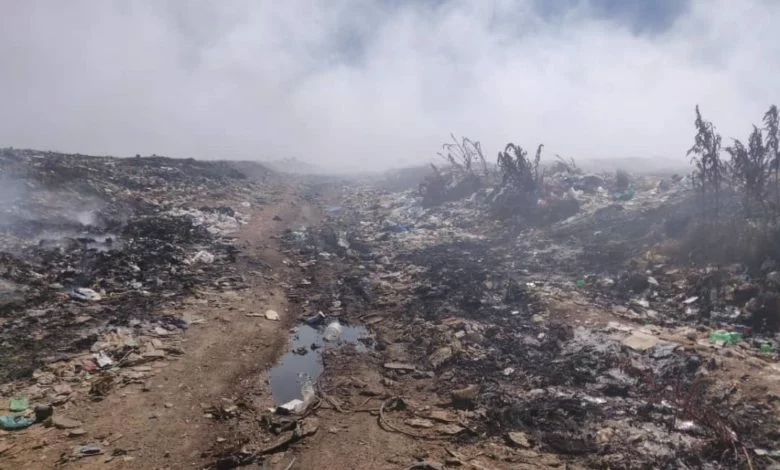
Bulawayo Mayor David Coltart has called for immediate action to address the growing health and environmental risks posed by Ngozi Mine, the city’s main landfill site, warning that the situation has become a matter of life and death for nearby residents.
Speaking during a full council meeting earlier this month, Coltart described the scale of pollution at the site as alarming.
“Councillors will recall that I posted an aerial photograph of Ngozi Mine showing the extent of the fumes, and I was utterly appalled. This is a matter of life and death. We do not fully appreciate the health consequences for people living downwind of those toxic fumes. It is a matter of exceptional urgency.”
On this topic
The mayor urged the city council to change its perception of the site, viewing it not as a burden but as a potential economic asset.
“We need to move past seeing Ngozi Mine as a problem and start seeing it as an opportunity. Sweden imports plastic waste, entire boatloads from Germany and Denmark, for profitable recycling. If they can do that, why can’t we? As a city, we need to think bigger when it comes to Ngozi Mine,” he said.
Coltart suggested that Bulawayo could transform Ngozi Mine into a regional waste management hub, leveraging its proximity to a major railway line.
“Ngozi Mine is less than two kilometres from the Victoria Falls railway line, which links our city to Livingstone, Lusaka, Francistown, Beitbridge, Gweru, Gwanda and Victoria Falls, all cities that generate plastic waste. Experts have advised that a major waste processing facility here could benefit the entire region in three ways,” Coltart said.
He outlined possible uses for plastic waste, including converting it into road-building aggregates or construction materials such as water tanks, and generating energy from non-recyclable materials. He also proposed establishing a biogas plant near the site.
“Plastic waste can be converted into aggregates for road construction, technology already used elsewhere. Our roads, including those in Victoria Falls, could benefit from this. Non-recyclable waste can generate energy, while a biogas plant could process certain gases, possibly in partnership with Azel B,” he explained.
Coltart also highlighted the mismanagement of organic waste, saying it could be separated and turned into compost or manure.
“Right now, organic and non-organic waste are mixed, but if separated, the organic portion could produce vast amounts of manure and compost, creating both products and jobs, especially for residents living near the site,” he said.
The mayor stressed that the crisis must become a top priority for the council.
“We must adopt international best practices. This must be treated with the same urgency as water supply, an absolute priority. If nothing is done and people start dying, we will be held accountable,” Coltart warned.
“Waste management facilities can be profitable ventures, but this situation cannot be allowed to continue unchecked. It requires urgent, decisive action.”
When others look away, we dig deeper. From ZPRA history to local corruption, CITE tells the stories that matter. Keep our journalism independent. Donate here



Leave a Reply