

By Mlondolozi Ndlovu
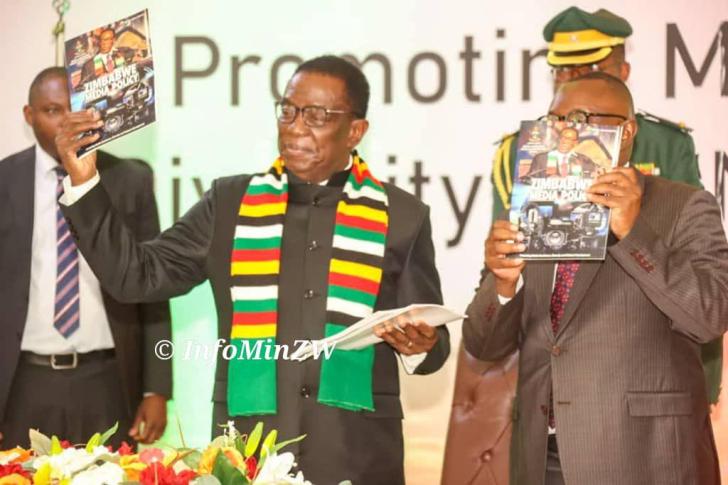
The Zimbabwe Media Policy approved by Cabinet in March 2025 is positioned as a transformative framework to align the country’s media landscape with democratic governance, national development, and digital innovation.
Titled “Promoting Media Excellence, Diversity and National Development”, the policy outlines lofty ambitions; strengthening freedom of expression. Enhancing access to information, encouraging professionalism, and asserting media sovereignty. Yet beneath these aspirations lie critical legal and democratic deficiencies, including a disregard for constitutional supremacy, absence of broad-based stakeholder consultation, embedded risks of media criminalisation.
While the policy may appear progressive, it undermines fundamental rights guaranteed in the Constitution of Zimbabwe, replicates already existing legal provisions, and risks narrowing civic space through administrative coercion masquerading as reform.
On this topic
The most glaring omission in the formulation of the Policy is the failure to conduct meaningful consultation with key stakeholders, including media practitioners, civil society, academia, and the general public. A policy that purports to guide the rights and responsibilities of media actors, must by necessity, include the perspectives of those it regulates. The absence of such consultation not only violates the principles of transparency and inclusivity but also undermines the voices of the relevant stakeholders. The policy must adhere to democratic expectations of openness and participatory governance. The rushed and top-down approach taken by the Ministry of Information, Publicity and Broadcasting Services further undermines the credibility of the policy and casts doubt on the genuineness of its developmental intent.
Consultative policymaking ensures that policies reflect lived realities. Excluding independent journalists, rural broadcasters, community media, and advocacy groups means the policy fails to address the practical needs of the very sector it seeks to regulate. Such exclusion amounts to the institutional erasure of relevant voices and has long-term implications for democratic trust and compliance.
Although the policy does not explicitly create new criminal offences, it effectively introduces a regulatory framework that permits punitive enforcement mechanisms resembling criminalisation. Section 4.8 of the policy outlines a series of penalties for media organisations and individual who violate undefined or vaguely framed standards. These include loss of licenses or accreditation, blocking or removal of content, mandatory apologies, disqualification from media industry awards, and legal action such as lawsuits for defamation, privacy violations or the dissemination of so-called falsehoods. While framed as administrative or civil measures, these tools can be easily weaponized to punish critical journalism, creating the chilling effect typically associated with criminal sanctions.
In addition, the policy framework creates space for the state to impose criminal liability by relying on already existing legislation such as the Cyber and Data Protection Act, a law that has already been used to target and silence dissenting voices, particularly those expressing themselves on digital platforms. In this context, the media policy reinforces not replaces a broader trend for legal repression, where statutory and regulatory frameworks are selectively enforced to suppress criticism under the pretext of protecting national interest or digital integrity.
Section 2 of the Constitution establishes the supremacy of the Constitution over all laws, customs and practices. It unequivocally states that “any law, practice, custom or conduct inconsistent with the Constitution is invalid to the extent of inconsistency”. Therefore, any policy, no matter how well-intentioned must align with constitutional provisions, particularly the Bill of Rights.
The Policy purports to support freedom of expression and access to information. However, it does so selectively and conditionally, focusing more on the state image and sovereignty than the rights of citizens and journalists. This is at odds with Section 61 (1) (a) of the Constitution, which guarantees every person the freedom to seek, receive and communicate ideas and other information. Furthermore, Section 62 (1) guarantees the right to access information held by the state or any institution or agency of government. These rights are not privileges conferred at the discretion of the executive, but foundational freedoms that form the bedrock of democratic society.
The loose use of the terms or phrase “other information” means that any information that is not harmful to society should be communicated. Even uncomfortable truths should be communicated, especially where they serve the public interest or promote accountability. A policy that tries to dictate the kind or nature of information that should be communicated such as insisting only on information that protects the image and sovereignty of Zimbabwe undermines this freedom of expression. This approach not only narrows the constitutional scope of what can be freely expressly but also risks turning legitimate critique or investigative journalism into perceived threats to national interest. In doing so, the policy compromises the essence of freedom of expression as guaranteed under Section 61 of the Constitution, which protects the right to communicate diverse ideas and information, not just those that align with state-approved narratives. The policy is therefore restrictive and inconsistent with the spirit of the constitution.
The policy’s strong emphasis on “defending national image and sovereignty” may be leveraged to suppress dissent or critical journalism under the guise of patriotism. While nation-building is important, using “patriotism” to police speech, journalism, or activism may undermine democracy, particularly if criticism in labeled as “unpatriotic”. True patriotism is not blind obedience or glorification of the state, it is loyalty to the people and values of a nation and willingness to hold the state accountable when it deviates from those values. It should be encouraged and not mandated, just like in the United States and South Africa patronage is not mandated but encouraged so as to promote democratic rights of its citizens.
The Constitution sets high standards for media freedoms. Section 61 (4) explicitly states that freedom of media is protected and state owned media must be impartial. In contrast, the Policy introduces vague qualifiers to freedom of expression. For instance it speaks of the need to protect Zimbabwe’s sovereignty, image and economic interests. While national sovereignty is a legitimate concern, it cannot justify blanket censorship of suppression of dissent.
President Mnangagwa cautioned media practitioners against disseminating harmful information that tarnishes the image of the country in the eyes of investors across the world. This remark reflects a broader governmental posture that media should serve state branding rather than public accountability.
Such expectations undermine the watch dog role of the media, which is essential for democracy, transparency, and good governance. A media system that must conforms to patriotic narratives cannot fulfill its constitutional duty to seek, receive and impart information and ideas, particularly on issues of public interest, corruption, governance and electoral integrity.
One of the structural weaknesses of the policy is it redundancy. Much of what the policy claims to introduce already exists in national law such as access to information which is governed by the Freedom of Information Act [Chapter 10:33], media regulation is handled by the Zimbabwe Media Commission Act [Chapter 10:35), digital and data protection is regulated by the Cyber and Data Protection Act [Chapter12:07] just to mention a few.
Instead of innovating or reforming these laws, the policy repackages them adding layers of bureaucratic control without addressing core sectoral needs such as funding, independence and safety of journalists. It introduces new administrative requirements such as fees for foreign media practitioners and mandatory content deposits for wildlife documentaries, but offers little in terms if actual media development or rights expansion.
Moreover by failing to harmonise these various laws, the policy adds complexity to an already fragmented regulatory landscape. This may deter investment, confuse media actors, and increase the scope for discretionary abuse by state officials.
To be truly effective, a media policy must promote rights based governance, align with constitutional protections, and foster an environments conducive to free expression, journalistic integrity, and technological innovation. This requires independent media regulation, free from political interference, public consultation in policy design and review, legal safeguards against censorship, retaliation or surveillance and investment in rural, community, and multilingual media platforms. A progressive media policy should aim to enhance pluralism, professionalism and participation, not control. The policy falls short of the democratic imperative.
The policy is guided by commendable principles of media pluralism, freedom of expression, transparency and whistleblower protection, and accountability just to mention a few. These values reflect the language of democratic governance and align at least rhetorically with international standards and constitutional commitments. However, is as much as these principles are commendable, many remain largely aspirational and are not supported by concrete institutional or legal mechanisms for enforcement. This is particularly concerning in areas where violations are most likely to be committed by state actors such as infringements on whistleblowers safety, suppression of critical media, and lack of transparency in regulatory oversight. Without independent enforcement bodies, binding legal frameworks, or clear remedial procedures there principles risk becoming symbolic rather than substantive.
However to its credit, the policy makes important strides toward digital modernisation, professional development, and medial pluralism. Initiatives such as the Media Fund, the protection against workplace harassment, and efforts to promote local content and language diversity reflect a genuine attempt to align media with national development goals.
In conclusion, the policy while articulated in developmental language ultimately prioritises control, image management, and bureaucratic oversight over media freedom, constitutional rights, and sectoral innovation. Its failure to undergo meaningful consultation, its duplication of existing legal frameworks, and its veiled endorsement of criminalisation reveal a policy that is more concerned with managing perceptions than with empowering citizens and institutions. In light of Section 2 of the Constitution, which affirms the supremacy of the Constitutional rights over any policy or custom, the Media policy must be urgently revisited to ensure that it does not undermine the very rights it claims to promote. In a democratic nation, media freedom is not a threat to national sovereignty, it is its guarantor.
Mlondolozi Ndlovu is the interim MISA Harare Advocacy Chairperson. He is also a media lecturer, legal and media researcher who writes in his own capacity. He is reachable on mlondo717@gmail.com.
At CITE, we dig deep to preserve the stories that shaped us—ZPRA Liberation Archives, the DRC War, and more. These are not just stories—they’re our roots. We don’t hide them behind paywalls. We rely on you to keep them alive. Click here to donate: https://cite.org.zw/support-local-news/



Leave a Reply