

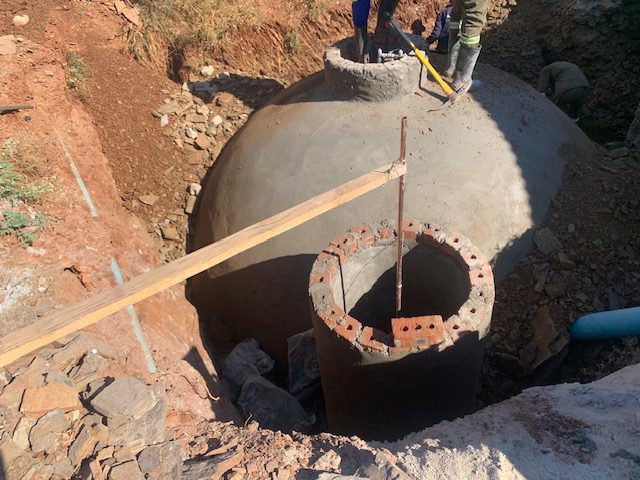
A school in Filabusi, Matabeleland South, is pioneering the use of sustainable energy by constructing a biogas digester designed to treat wastewater and convert organic waste into clean energy.
Ivinar Park Academy is working with Living Falls Biopower, a renewable energy company, to install the system, which will use sewage and organic waste including kitchen scraps and lawn clippings to produce biogas for cooking and heating water.
“We are building a biogas digester that treats wastewater and generates gas from sewage and organic waste,” said Chisco Simweena, the company’s managing director. “The gas produced will be used for cooking and heating water at the school.”
Simweena said the initiative is part of efforts to expand the school’s renewable energy infrastructure, as Ivinar Park Academy is not connected to the national electricity grid.
On this topic
“Our main goal is to boost the school’s reliance on renewable energy. This school already operates entirely off-grid, and the digester is expected to further reduce its dependence on conventional fuels,” he said.
The digester is expected to produce around 7kg of biogas per day — enough to meet the school’s cooking needs, which currently require about 50kg of gas every two weeks.
The system also offers environmental benefits by safely processing wastewater and capturing methane, a potent greenhouse gas, for energy use, rather than allowing it to escape into the atmosphere.
“Sewage emits methane, which is harmful to the environment,” Simweena said. “What we’re doing is capturing that gas and using it to produce energy, which contributes to the fight against climate change.”
Biogas digesters, he added, are more effective at treating wastewater than traditional septic tanks, which are often used in areas without access to proper sewage systems.
“In places like Harare, where housing developments are expanding rapidly, septic tanks are no longer sufficient,” he explained. “Poorly treated water contaminates groundwater, posing serious health risks. A biogas system offers more comprehensive treatment.”
Simweena said Harare remains a key focus for the company due to its dense real estate developments and regulatory policies that discourage the use of septic tanks in large-scale housing projects.
“In high-density areas, you might find a septic tank every 50 metres, and that can pollute groundwater and spread disease,” he added.
At CITE, we dig deep to preserve the stories that shaped us—ZPRA Liberation Archives, the DRC War, and more. These are not just stories—they’re our roots. We don’t hide them behind paywalls. We rely on you to keep them alive. Click here to donate: https://cite.org.zw/support-local-news/



Leave a Reply