
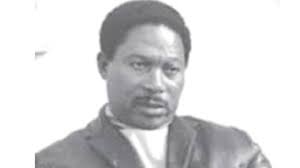
Former ZPRA cadres, ZAPU members, politicians and interested youth gathered in Bulawayo on May 1 to commemorate the life and legacy of Jason Ziyaphapha Moyo, popularly known as JZ, at a memorial lecture hosted by Ibhetshu LikaZulu.
The event was a powerful tribute to a man widely remembered as the intellectual engine of the ZAPU and its military wing, ZPRA, who helped to shape and direct the course of the liberation struggle.
Moyo, who was assassinated on January 22, 1977, by a parcel bomb at the Lusaka offices of the African National Congress (ANC), remains a towering but under-acknowledged figure in Zimbabwe’s liberation history.
Despite extensive investigations by the Zambian government, with assistance from Botswana and ZAPU, the circumstances surrounding his death remain shrouded in mystery.
On this topic
Veteran ZPRA cadre, Ben Moyo, remembered JZ as “a political strategist, intelligent but able,” who strongly believed in “principled unity” and had no tolerance for security breaches or opportunistic alliances.
“JZ took exception when Chikerema brought a British TV crew to film the crossing of cadres. That was a serious breach. He believed unity must be based on principle, which is why the party under his leadership later purified itself of such elements,” Moyo said.
Moyo praised JZ’s capacity to lead in times of internal crisis, a sign of his astute leadership.
“ZAPU is like a phoenix. Each time it underwent a crisis, it emerged stronger. When Smith banned us in 1964, we went underground and continued operating across the country, unlike ZANLA, which had to build its structures through violence and intimidation,” he said.
Despite past betrayals, Moyo said JZ always welcomed back those who had left the movement, such as Tshinga Dube and Ambrose Mutinhiri.
“He still welcomed them back because he believed in unity as a principle, not as a convenience,” he added.
“At a regional level, JZ played a crucial role in building solidarity among the Soviet-aligned liberation movements such as the ANC, FRELIMO, SWAPO, and MPLA.”
According to Moyo, it was JZ who cemented relations between ZPRA and Umkhonto weSizwe (MK), the armed wing of the ANC.
“MK fighters were even squatted by ZPRA cadres in joint operations,” he recalled.
Moyo narrated how, before ZAPU received direct arms support from the USSR, JZ and Abraham Nkiwane were invited by MPLA leader, Augustino Neto, to select arms from a Soviet shipment docked in Jerusalem.
“Such was the respect JZ commanded,” he noted.
“JZ’s ideological influence was far-reaching. In 1974, under his leadership, ZAPU adopted Marxism-Leninism and scientific socialism. Professor Malandu, who became secretary for political education, developed a syllabus that was taught across all ZAPU camps. JZ also built international solidarity, creating relationships with Vietnam, Cuba, North Korea, China, Iraq, and progressive movements in the West.”
An intellectual, Future Msebele, noted how JZ was not just a military strategist but also an intellectual who shaped revolutionary theory.
“Without revolutionary theory, there can be no revolution. JZ guided the movement ideologically when the nationalist leaders were imprisoned. He transformed ZAPU from a mass movement into a socialist one,” Msebele said.
Msebele also raised the possibility that JZ was assassinated in a similar fashion to Chris Hani in South Africa.
“They knew if you take out the intellectual head of the movement, you kill the revolution,” said Msebele.
Reflecting on Gukurahundi and internal party discipline, Msebele contrasted JZ’s handling of the March 11 rebellion with ZANLA’s brutal suppression of the Nhari rebellion, sentiments which Moyo concurred with.
“Nhari was an ex ZPRA when he deserted and joined Zanu. Zanu made him commander, and sent him to the front but Nhari discovered problems and fighters needed more weapons. When Nhari reported the problem, the response of Tongogara and company was to kill all of them. So the important thing is how did ZAPU end its own rebels under the leadership of JZ? No one was killed,” Moyo said.
“You are talking here of the liberation movement, as I said, that is composed of freedom fighters, not terrorists. I say that with pride, that I served the movement of freedom fighters from the age of 11.”
Former ZAPU secretary general Dr Strike Mkandla emphasised JZ’s disciplinarian and commitment to the struggle but lamented how ZPRA was the only authentic liberation movement in southern Africa that did not rule.
“I mention this because people wonder why ZAPU, the most revered liberation movement in southern Africa did not rule. The answer for me is ZAPU immediately discovered who its enemies were,” he said.
Patron Nketha, another veteran, spoke of the 1976 Geneva Conference, crediting JZ and Nikita Mangena for rejecting Henry Kissinger’s plan to co-opt the guerrillas.
“Each fighter was to be given two cars and a house. JZ said no, ‘this is not the independence we want. We want transformation and redistribution of wealth,’” Nketha said.
He added that JZ’s slogan, “Not a moment without a movement,” continues to inspire genuine revolutionaries today.
“If you see one in a revolution and his family is sitting pretty, he’s a sellout, if one is effective in revolution, your family will suffer. Those were a totally different crop of politicians. I don’t know whether we will have such politicians again. Looking at the current crop we have, we must accept the law of diminishing returns,” Nketha said.
The memorial lecture was abound with calls for renewed public recognition of JZ’s legacy. Speakers agreed that JZ’s contribution to the liberation of Zimbabwe has been neglected in official narratives, overshadowed by other political figures.
“It’s shameful that we are only now beginning to publicly discuss JZ’s role,” Msebele said.
“He built the machine that carried out the revolution when others were still imprisoned. He deserves his place in history.”
During the lecture, Moyo said at JZ’s funeral, Joshua Nkomo echoed powerfully: “The work that JZ has built must live. And live, it must…There is one monument you must build, you must create, in the name of JZ. And that monument is the unity of the people of Zimbabwe. The unity of the people of Zimbabwe in their struggle against imperialism.”



Leave a Reply