
By BM Mkwananzi Prince of Mthwakazi
For far too long, the discussion around kingship has been subjected to distortions and hesitations that are both constitutionally unjustified and culturally harmful.
It is not only important but urgent that we confront these distortions openly, with the clarity that both our law and our heritage demand.
The Constitution of Zimbabwe does not prohibit anyone from identifying with, respecting, or revering a King, Chief, or any traditional or religious figure. On the contrary, it strongly protects the cultural rights of individuals and communities. Section 63 enshrines the right of every person to use their language and to participate in the cultural life of their choice. Section 60 guarantees the freedom of thought, conscience, religion, and belief — including the right to express those beliefs openly and in community with others. These rights extend fully to recognizing and upholding our traditional leaders, Kings, and spiritual heads.
On this topic
It is critical to understand that while the Constitution regulates the conduct of officially recognised traditional leaders under Section 281, it does not outlaw cultural or spiritual leadership outside the formal administrative framework. The Traditional Leaders Act provides a process for government recognition where administrative functions are concerned, but it does not criminalise cultural acknowledgment. Thus, it remains fully lawful and constitutional to recognise and uphold a King, even without state administrative recognition.
Some have argued — falsely — that the concept of kingship is incompatible with the constitutional order. This argument fails at the most basic test of cultural freedom. It seeks to erase African spirituality, heritage, and history by pretending that the Constitution, itself a product of our decolonisation struggles, requires the abandonment of ancient systems. This is disingenuous and ironic, because the very freedoms used to make this argument — freedom of speech, belief, and culture — are the same freedoms that protect the institution of our kingship.
Moreover, executive authority in Zimbabwe is solely vested in the President, as provided under Section 88 of the Constitution. This authority remains intact and unaffected by the existence of cultural or spiritual Kings. Recognizing a King — recognized by whichever community or people — is not an attempt to usurp executive authority; it is an expression of cultural identity and spiritual leadership. There is no conflict, legal or constitutional.
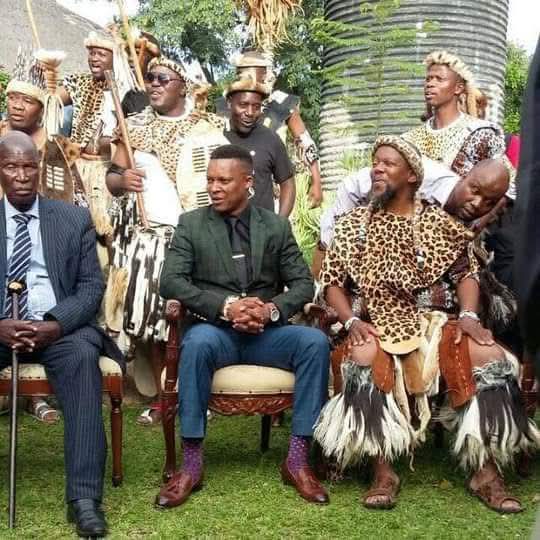
When a recognised King such as Bulelani Lobengula — recognised by whichever people — visits the Mayor of Bulawayo, it is within the Mayor’s lawful authority to receive him with the dignity and title afforded by his people. The Urban Councils Act [Chapter 29:15] does not prohibit mayors from hosting guests according to their cultural or social status. There is no law that restricts who may sign the visitor’s book, nor is there any law forbidding recognition of a cultural leader by their title. The Minister of Local Government has no direct authority to override or censure the ceremonial conduct of a mayor unless it breaches clear municipal regulations — and none are breached by extending respect to a King visiting with the Khumalo royal house elders.
In fact, it is a profound misnomer that Bulawayo — famously known as the “City of Kings” and aptly named by King Lobengula himself — cannot celebrate or recognize its true heritage, when even Queen Elizabeth II herself once signed the city’s visitor’s book, despite her monarchy being historically linked to the destruction of the Mthwakazi Kingdom and the exile of King Lobengula’s descendants. To attempt to censure or limit the recognition of King Bulelani today would itself constitute a violation of constitutionally protected cultural rights, and would amount to colonial amnesia.
The broader silence from the Khumalo royal house has, unfortunately, deepened confusion among isizwe. While respecting the dignity and traditions of the Khumalo Indlunkulu, it must be said that silence at this critical juncture has unintended consequences. It leaves the nation torn, creating space for factionalism and disillusionment. The Khumalo Indlunkulu, as the spiritual and moral anchor of the nation, must now step forward and proclaim — openly and clearly — who constitutes the royal house and where they stand regarding the kingship.
This is not a moment for private diplomacy. Isizwe demands public affirmation and leadership. The notion that kingship should be delayed or left ambiguous because of political or administrative concerns has no merit. A ceremonial kingship today — standing as a spiritual and cultural center — strengthens the nation rather than undermines the state. It is, in fact, essential for the spiritual cleansing, unity, and healing of the people, who were always bound together by deep spiritual foundations.
A core part of this spiritual foundation was Inxwala — a sacred ceremony of cleansing, thanksgiving, and reconnection with the ancestral spirits. Inxwala was not merely a ritual; it was the living renewal of the nation’s soul, led solely by the King, the living bridge between the ancestors and the people. Since the fall of the Mthwakazi Kingdom through brutal colonial conquest, there has been no true reconnection of isizwe with its spiritual compass. The sacred cord has been left severed, and the children of this nation have been left to wander, bentanta nezwe, disconnected, disoriented, and dispersed across foreign lands without a guiding ancestral beacon.
The booklet “Alban Njube Lobengula Iqanda Lengwenya” is a remindsler to us of how the legacy of the nation hangs precariously with perennial near hits but with hopeless misses at the behest of various administrations. The structures that built isizwe can either be revived through bold action, or collapse through cowardice and silence. To allow the same colonial fate, which severed our people from their throne and their spiritual life, to once again steal our rebirth would be a tragedy of unspeakable proportions.
We must understand: colonialism did not merely conquer land — it conquered the spirit. It deliberately disrupted royal succession, forcibly imposed foreign religions, criminalised indigenous practices, and systematically dismantled our spiritual structures. To deny or hesitate on kingship today is not a neutral act — it is the active continuation of colonial disruption. It is the betrayal of the ancestral bloodline, the acceptance of the severance of our soul.
When we trace the revival of the Kingship, we find that it is not a modern struggle. Brave Izinduna like Chief Nyangazonke, Chief Douglas Ngungumbane, and others initiated the journey to search for the rightful heir in the early 1990s. Their wisdom and sacrifice laid the foundation for the present revival. Esteemed Chiefs such as the late Chief Vezi Maduna Mafu kaGodlwayo and the revered Chief Nhlanhlayamangwe Ndiweni (Khayisa weNhlambabaloyi) gathered openly with the now recognized Bulelani Lobengula. The Royal Crown Council, chaired by Chief Mathema (uJama waseNqameni), worked quietly and diligently alongside respected Chiefs like Chief Maphisa (Fuyana weSizindeni) and others to restore the Kingship. All the elders need to find each other wherever they have lost each other!
Surely all this groundwork must not be allowed to wither away. It cries out now for finality — clear, open, and publicly witnessed by isizwe itself — not left trapped in endless internal shadows and uncertainty.
I personally feel compelled, with the pain that sears my heart, to humbly intervene and plead with our elders to finalise and conclude this matter openly. I believe part of why we suffer indignities, even beyond our borders, especially in South Africa, stems from our disconnection from our spiritual and cultural center. I have myself stood on the frontline — at great risk to life — in defense of our people. One such near death experience was when our brother Elvis Nyathi was brutally murdered and burnt alive simply for being “a foreigner without a passport.” and I subsequently stood up to voice against this. Interestingly King Bulelani Lobengula was right there at that venue also pained by the callous deed despite the different capacities we had arrived at the venue through.
It is in this pain, in this blood-soaked soil of daily suffering, that I speak. Daily, our people fight for survival, mocked, beaten, ridiculed, starved of dignity. Meanwhile, plots, quarrels, speculations, and divisions fester — while the custodians of our nation delay closure. And all the while, isizwe is dying!
I plead, from the deepest well of my spirit: Let there be a transparent and public resolution, conducted before Thina isizwe! — Thina abanikazi babo ubukhosi! We cannot afford endless shadows. We cannot allow the spiritual rebirth of a nation to be choked by hesitation. Our destiny demands leadership that steps forward into the light, reconnects us to our ancestors, gives our wandering children a home, and restores our soul through the sacred seat of the King and Inxwala.
Our Kingship is not a political rebellion. It is the living testimony of our culture, our spirituality, and our identity. It is protected by law, demanded by history, and essential for the rebirth of our people.
The nation will not be complete without the restoration of its spiritual compass, its seat of guidance, Inxwala yaso, and its King.
It is time. Time to reclaim what was destroyed and stolen. Time to restore the throne. Time to reconnect with our ancestral pride. Ubuntu bethu. Time to rise — openly, proudly, and without apology.







Leave a Reply