
By Vincent Ndlovu aka Hillary Vambe
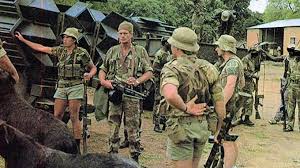
The Rest Camp Battle in Tsholotsho District remains one of the most memorable, as a testament to both the bravery and battlefield superiority of ZPRA combatants.
At the centre of the battle was the controversial head tax collection – umthelo wekhanda – which was forced on rural communities.
In March 1979, as it was celebrating its anniversary in power, the Zimbabwe/Rhodesia government of Bishop Abel Muzorewa tried rather too hard to demonstrate to the rest of the world that it was in control by resuming the collection of the head tax, also known as the poll tax.
On this topic
For many years, the Rhodesian government could not collect this tax in Tsholotsho because ZPRA guerrillas had either completely driven them out, or rendered their control of the district ineffective.
It had become impossible for the tax collectors officials to enforce the collection of collect these taxes in Tsholotsho without security forces escorting them.
One morning in March 1979, our section of ZPRA guerrillas outside Mbamba village, South East of Tsholotsho was disturbed by the sound of a convoy of RF trucks. Before long, very agitated youth spotters from Emagumundwini village arrived.
They informed us that there seven RF army vehicles, led by the fearsome Rhodesian-made armoured landmine-protected “Leopard ” (Isikhuthukhuthu) had stopped at the local borehole. Soldiers had disembarked and swarmed nearby homes to instruct all villagers to go to the Rest camp and pay their overdue taxes.
Meanwhile, the trucks proceeded to Tshetshisa and Gandisa villages to drop more soldiers on the same mission before proceeding to the Rest camp where all the soldiers would ultimately gather.
Upon getting the information, we gave counter instructions that as soon as the soldiers left, all the villagers should leave their homes and go to their fields. We even joked that “we would be going to pay the taxes on their behalf”. We were a section of seven, and knowing what we were capable of, the villagers left for their fields as soon as the soldiers left.
The soldiers carried on with their mission through Mbamba, Tshetshisa, and Gandisa villages, a total of four villages including Magumundwini where they had started. After going through all the villages, all the soldiers were then picked up by the trucks back to the Rest Camp for lunch. We had moved out of the village at the arrival of the soldiers but kept the youth monitoring their movements and reporting to us.
It was while they relaxed and had their lunch that our unit of seven decided to pay them a “courtesy call.” We manoeuvred ourselves until we reached the nearby Cattle Sale pens from where we could vividly see the soldiers milling around, some even having their guns against walls and trees as they helped themselves to some food.
Using the sale pens as cover, we launched a grenade from an SKS grenade-launcher, and as the grenade exploded, we opened fire from our AK rifles and one RPD. It was too much of a surprise that there was only our fire for a couple of minutes before they shocked soldiers could return fire, by which time the damage had been done, and we were already racing out of their firing range.
It is then that they launched a chemical flare that exploded in the air into yellow shreds that filled the air. One of our guerrillas, Rodwell Mtshina, was affected and started breathing heavily and vomiting yellow stuff. We had to withdraw to nearby Siyangaya village where the excited villagers, after hearing the gunfire, quickly provided us with fresh milk, which we administered to Mtshina to neutralise whatever poison could have been from the flare. By evening, he felt better, and we were ready for any enemy follow-up, which didn’t occur. Later that day, a helicopter with a red cross ❌️, landed at the Rest Camp to collect bodies and the casualties. The section of seven had the following as its members : Zenzo Sibanda, popularly knows as Oliver, Rodwell Mtshina, Themba Mpofu (Havai) Issue Nhari, Mike Kaiser Moyo, Lonika Nyathi (Mambodlela) and yours truly.
This was one of many battles/skirmishes fought around Tsholotsho district.
For more on the war in Tsholotsho district, which by 1980 was described by the Horizon/Drum magazine as the “most war-torn area in Matabeleland,” get hold of the book titled,” Seeking Freedom and Justice (Loyal But not Docile) by Vincent Ndlovu whose pseudonym was Hillary Vambe.




Leave a Reply